The Obligatory iOS Podcasting Setup Post

Yesterday, I recorded a great conversation that I’ve been looking forward to and wanted to share how I use a phone and tablet to record the podcast.

After finally working up the courage to record and edit my voice in conversation with others, I think anyone can start a podcast with very little equipment. Fancy microphones, expensive mixers, etc. are not really necessary and in fact many people are just using their phones and a platform like Anchor.

Equipment

I knew I didn’t want to buy extraneous and bulky equipment. I wanted minimal and portable, like the two devices I use. Even more so because I’d like to do in-person recording sessions in the future, like my episode with Hudy.

The only investment I made was in Røde’s SC6-L Mobile Interview Kit. I’ve mentioned it before but it’s pretty fantastic if you have an iPhone with a Lightning port.

The kit comes consists of a small dongle and two lapel microphones. I haven’t used it yet, but I also bought one mic extension cable. This will probably come in handy for socially distant conversations.

The dongle has three audio jacks; two for the microphones and one for headphones. By using Røde’s Reporter app, I can also split the two mics into different channels and monitor the audio with headphones. This means when I import the audio into Ferrite on my iPad, I can edit the channels separately.

Recording

For my last two sessions, I’ve recorded remotely in my downstairs room. I haven’t needed to fiddle with acoustics at all, and my audio (despite my elongated pauses, ummm’s, and pronunciations) sounds pretty good to me.

But this means I’ve had to rely on my guests to record their end. There are ways around this. I didn’t have good luck using a Discord voice channel, and the chat bot Craig + Ennuicastr for a first test run. But when I can get this set up properly, it will simplify things greatly for other remote participants.

Theoretically, I’ll be able to invite guests into a private Discord (which could be web-based and without downloading an app) and they can use some earbuds and talk like a normal phone call.

On my end, I use my phone with the dongle to record my audio and take a FaceTime or Zoom call on my tablet. I use one AirPod connected to the iPad/call and one wired headphone plugged into the dongle to monitor my side’s audio.

Editing

One thing I didn’t think I would enjoy so much was the actual audio editing process. But Ferrite by Wooji Juice makes things pretty intuitive with a combination of touch or a stylus like the Pencil and keyboard shortcuts. There are many resources out there for people interested in editing on a tablet (or a phone) using Ferrite.

Posting

While I’m not sure my method of hosting and posting will be sustainable if and when listenership increases, right now I upload the compressed .mp3 files into my WordPress media library and use Blubrry’s plugin and Category Podcasting option. I only want iTunes to scrape the Podcasts category for the RSS feed while ignoring everything else on Among the Stones. If you have a dedicated site to for your podcast, you wouldn’t need this particular capability and any other podcasting plugin would work.

I used Graphic to make some quick artwork.

That’s it! I’ll be editing yesterday’s conversation tomorrow and hopefully getting it out on Monday.

“We Have Nothing to Give You But Your Own Freedom”

I thought the quarantine would allow me to read more books than I have. Old habits of only starting longer books, or becoming distracted by articles or tweets, die hard.

But having Deleted Twitter™ (once again) and consciously making time to read every night before bed, I finished Ursula Le Guin’s The Dispossessed yesterday.

And I loved it.

A good friend of mine gave me his copy when I was last in California two years ago and it’s been with me since, yet sitting. On a recent FaceTime call, where we inevitably discuss all that’s interesting to us in a hodge-podge of rapid-fire questions, quips, and segues of politics, culture, history, etc., he mentioned he had reread it. I vaguely knew the premise;

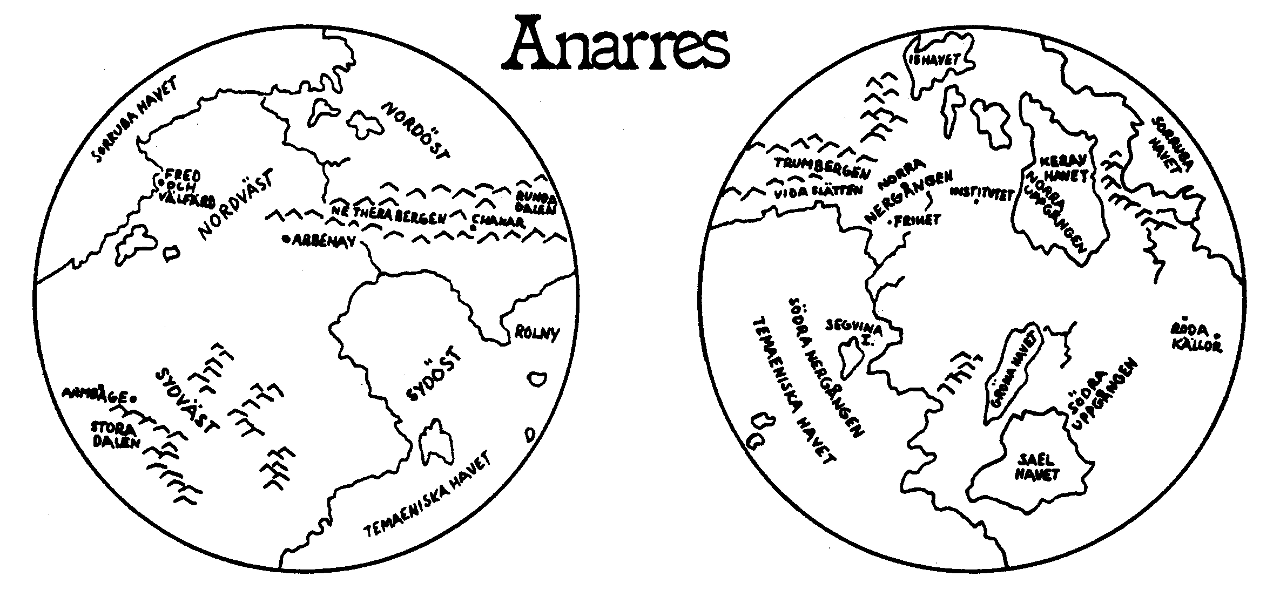
170 years after a group of anarchists settled a capitalistic planet’s moon after a successful revolution and absolutely no interplanetary contact, one comes back.

As usual, whenever I make time for fiction, the stories that draw me in occasionally have more profound thoughts than some dense book of theory or history.

What do social relations look like in a planet where there is no government, no currency, no prisons, no law? Where everyone consciously chooses what to do but with the awareness of themselves as part of one social organism, scrappily making a life out of a planet with very little natural resources?

Le Guin’s imagination and the big ideas in the book were much more interesting to me than how she wrote them. The book oscillates between the Shevek’s (the protagonist and Anarres’ most brilliant physicist) life on his native Anarres and after he lands on Urras.

The story was good, but for me, the book’s what-if scenario drew me in the most. What if there was a successful anti-capitalist social revolution? What if the victors win concessions, like almost two centuries of uninterrupted peace?

“We have nothing but our freedom. We have nothing to give you but your own freedom. We have no law but the single principle of mutual aid between individuals. We have no government but the single principle of free association. We have no states, no nations, no presidents, no premiers, no chiefs, no generals, no bosses, no bankers, no landlords, no wages, no charity, no police, no soldiers, no wars. Nor do we have much else. We are sharers, not owners. We are not prosperous. None of us is rich. None of us is powerful. If it is Anarres you want, if it is the future you seek, then I tell you that you must come to it with empty hands. You must come to it alone, and naked, as the child comes into the world, into his future, without any past, without any property, wholly dependent on other people for his life. You cannot take what you have not given, and you must give yourself. You cannot buy the Revolution. You cannot make the Revolution. You can only be the Revolution. It is in your spirit, or it is nowhere.” — Shevek

The end of the book was easily my favorite part. A mass demonstration, the consequences of when popular unrest meets the ruling class, a meeting and conversation with another planet’s ambassador, and a revolution inside a revolutionary state.

I sped through the last forty or so pages to catch my friend on FaceTime and discuss it. In our long-winded way, he touched on the book, the moment, and everything else that we fancied. Then he dropped another recommendation; *Kim Stanley Robinson’s The Years of Rice and Salt. Another author who I’m aware of yet have never made the time for. This one is an alternative history if the Black Death had wiped out most of Europe and speculating on the last 700 years if Islam and Buddhism were the major poles of power on Earth.

I think I might just go to him for every fiction recommendation.

But first, Murray Bookchin’s The Next Revolution: Popular Assemblies and the Promise of Direct Democracy.

Slim Pickings in Galicia

Winter is coming.

Finding a rental was already tough in this area of Spain. Most spare home owners or people who’ve inherited something would rather sell than maintain a place well enough for a tenant be interested.

With Spanish people still reeling from a difficult quarantine, the continued teletrabajo ability for the truly lucky ones, and current second wave of coronavirus after the summer, it seems it’s even harder to find anything.

We’re taking a pause on looking to buy something for the moment. Thinking nearer future, we realize that while our current house is fantastic for the fall, spring, and summer, it was pretty uncomfortable here this winter. But our landlady is unwilling to replace the drafty window and door, or install an actual floor on the bottom level, to make the space more livable. The rent is cheap, but she’s even balked at the thought of us paying more to do these necessary improvements.

“When you two leave, I’m locking the house up and turning off the utilities. Ay, muchos gastos!

In winter, the only warm area is the kitchen/my workspace with a pellet heater. This leaves Patricia’s workshop/our living room extremely frigid. We reluctantly used an electric space heater that my folks were gracious enough to buy when they visited (also for their own self-preservation last December), but it doesn’t fix the problem.

We’ve been here before. So once again, we’re scouring idealista and milanuncios everyday.

Between #VanLifing and House-Hunting: Was That a Vacation?

I’m becoming an expert of the towns in southern Lugo. Silleda, Melide, Bóveda, Pantón, Sarria, Láncara, O Incio. But before we left a week ago to celebrate Patricia’s mother’s birthday, we thought we were going to A Coruña to visit Fragas do Eume, or perhaps some of the province’s incredible beaches and forget about fincas and casas rústicas.

Nature had a different plan for us, however. The tropical storm Kyle came, producing an almost ciclogénesis explosiva. Next, we thought of heading east towards the Navia Valley in Asturias (which Galicians consider as part of Galicia or Galicia estremeira) but short on time and in a different mood, we decided to stay closer to the area between Sarria and Monforte de Lemos.

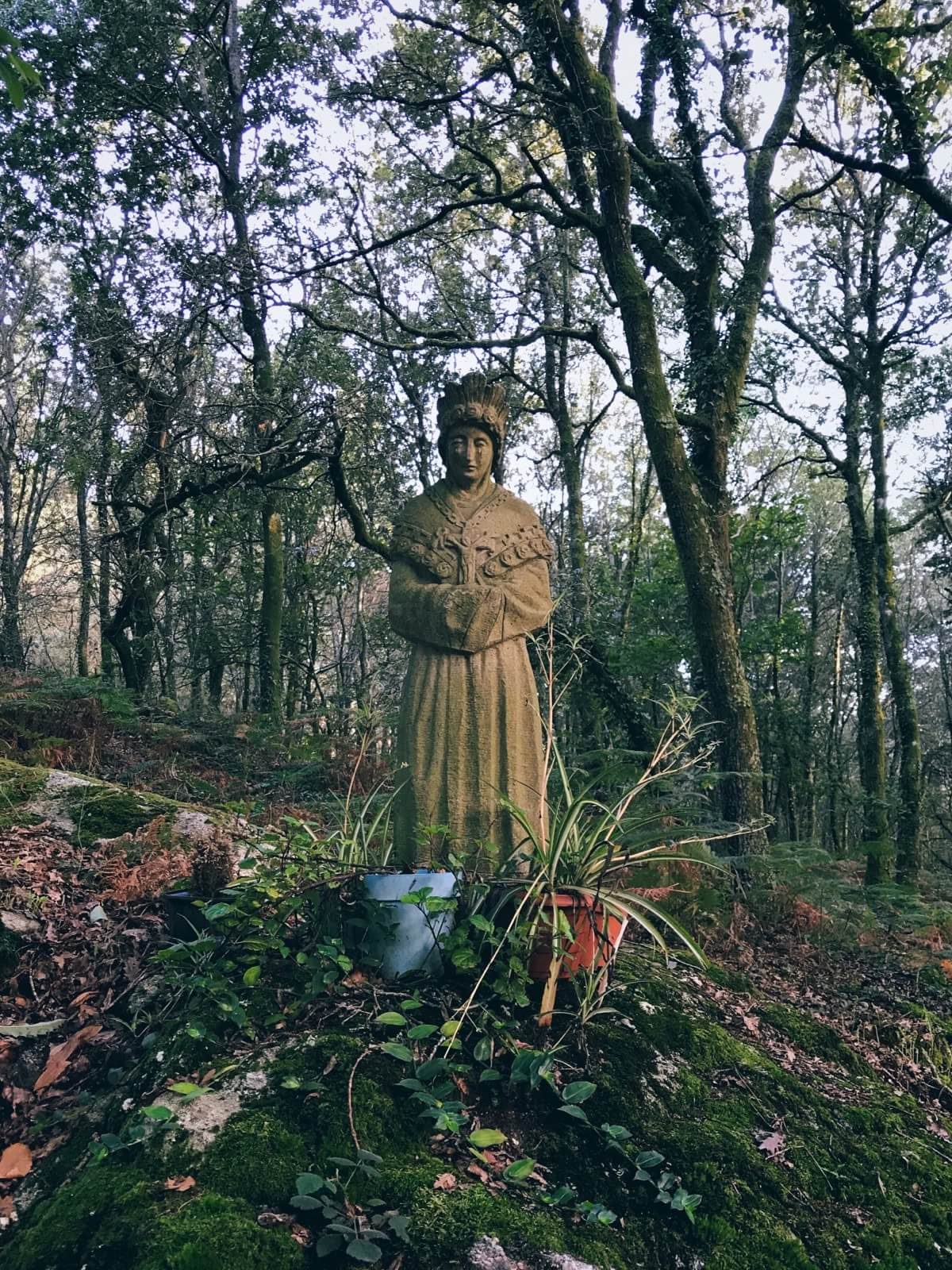
After a day or so around Silleda and Melide, and learning about marian apparitions, their inspired movements, and seeing el Santuario de la Saleta, we started visiting some of our favorites from idealista, the zillow/Redfin of Iberia.

And as probably anyone who has been in a position to buy land or a house can tell you, it is not a walk in the park.

There have been a few places, affordable for us to in need of lots of time and work to make them habitable, with their different and respective pros and cons.

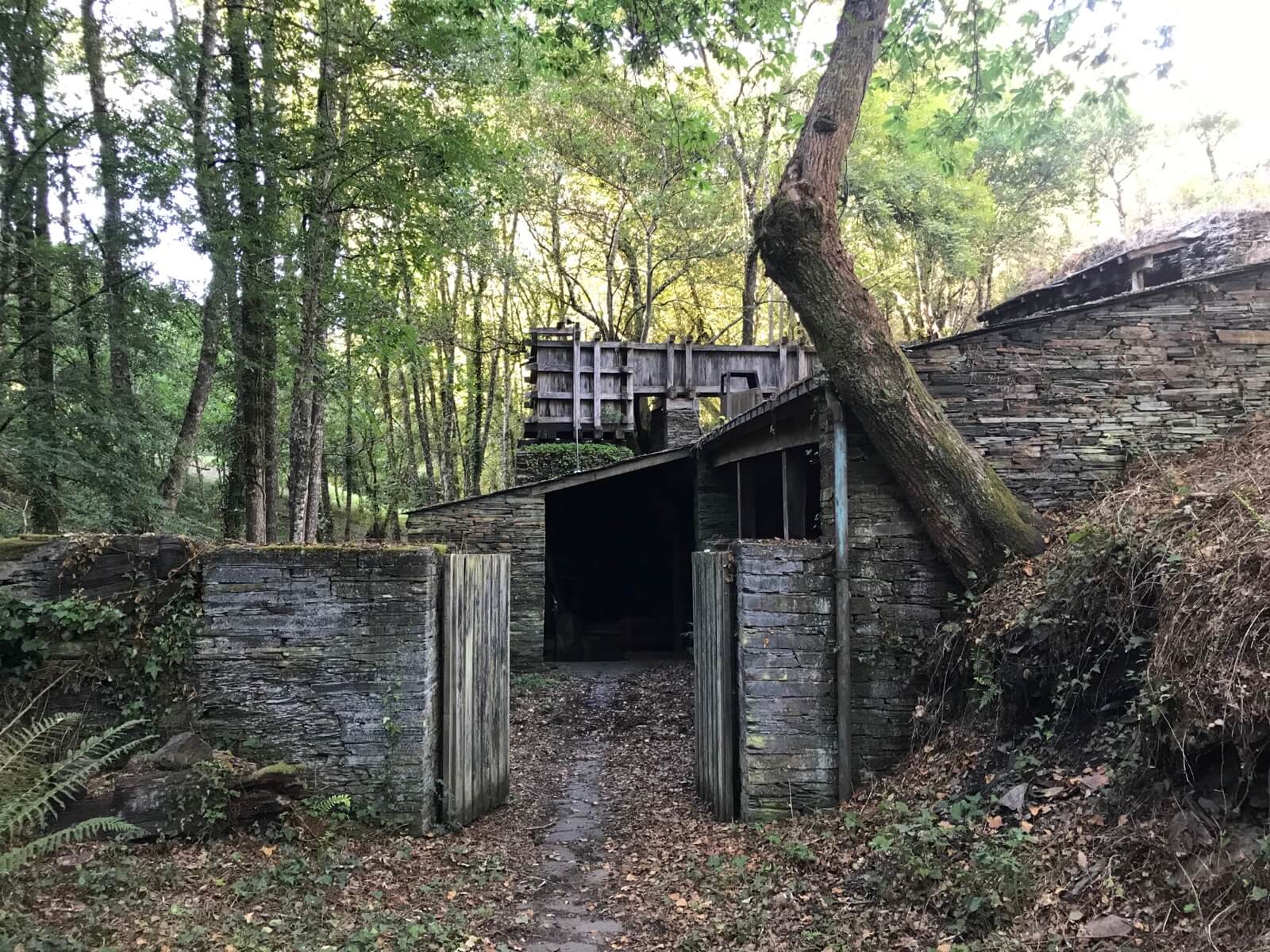
  • In Ver, Bóveda, we discovered a mini-oasis next to el río Mao, a parcel that was so fertile from the wells that it was like a fairytale. On higher land, there was complex of stone structures, a small workshop, an attached narrow stone house with an incredible veranda, and a huge traditional casa grande that was a bat guano factory. The owner’s father lives up the hill, in a sixth-generation Galician ironworks and casa rural that he inherited. After a tour and a nice conversation with him and his wife, we returned to camp on the property. But my love is a notorious mosquito magnet and we had to flee in the evening, back to Vilasouto reservoir in O Incio.
  • In a small aldea close to Oural and Sarria, we returned to see a house we’ve been thinking about for a month or so; an old stone house with an attached brick barn that could be transformed into a very open floor plan with lots of natural light, enough land to create a rural tourism/workshop space, a small lake, and a grove of castaña, apple, and pear trees. Coincidentally, we met the owners taking a day to weed the area.
  • After Patricia’s macramé workshop in O Garaxe and one shower in the last week or so, we drove south, back to Ourense, to enjoy our own bed and kitchen. But not before momentarily stopping in a small village near Pantón. We’ve been around here before. Perhaps it was the light, a little after golden hour, or the road we were on. But the meadows and forests became enchanted and we saw the area with much different eyes than previously. As we followed Google Maps to a house in which the owner and I had been in contact for a few weeks, we met the neighbor, a woman who was actually born in that house. In the meadow in front of the house were horses and llamas, a nice reminder of Peru en plena Galicia.

While all of these were special in their own way, we’ve also talked to owners and neighbors who have different pieces of advice for us; don’t restore, it’s a money pit, build something new, etc. All of which is great advice but produces a headache and a feeling of vertigo in the beginning of this process.

Whatever happens, it will be a long process. But one advantage of this impromptu trip was solidifying our search area. Now, it’s time to talk to an expert in bio-construction, as we continue to dream of an ecological, and economical, project.

Considering the Eucalypt

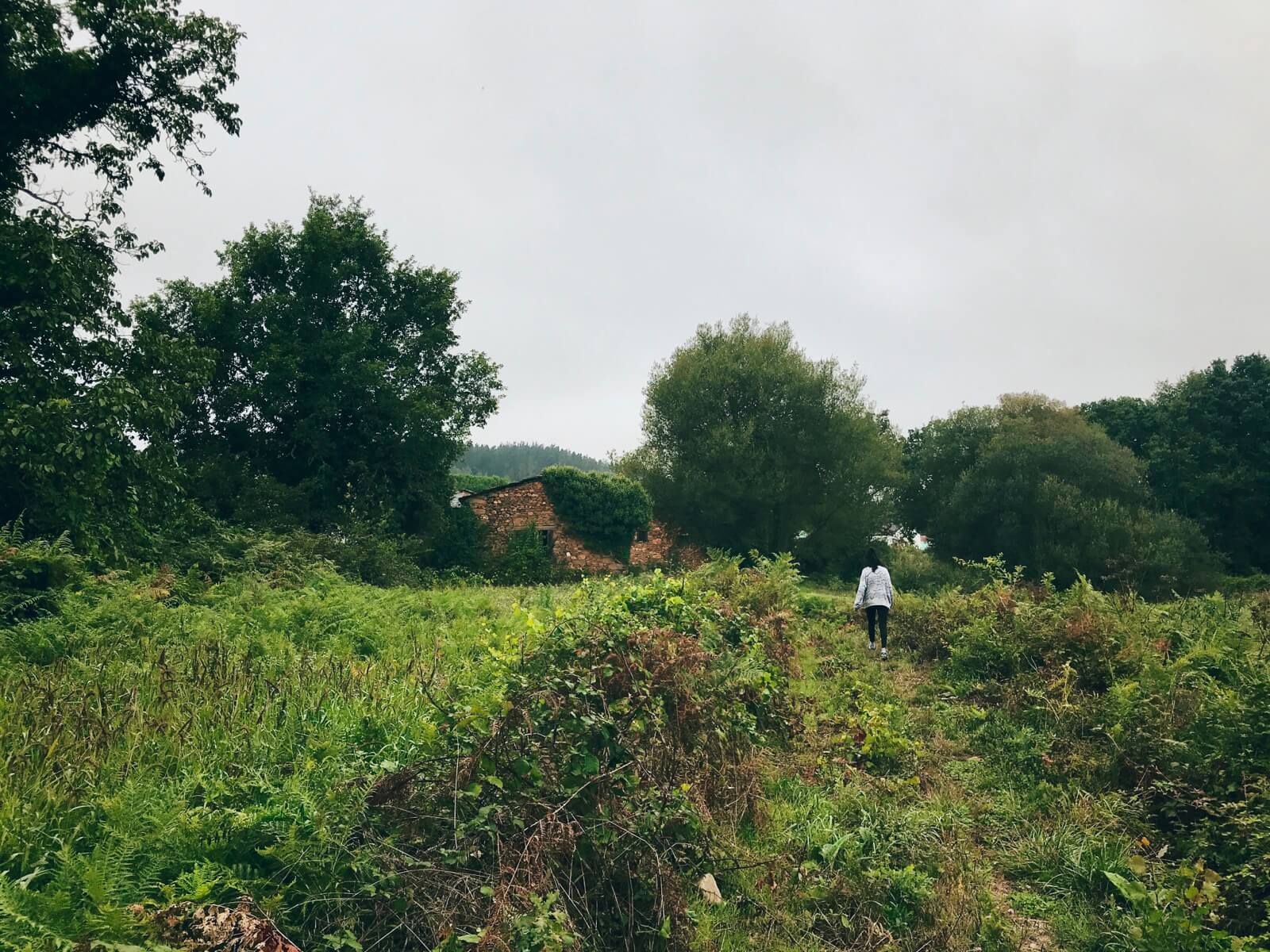
Near Vila de Cruces, September 2019

It’s hard to ignore the ubiquity of eucalyptus in Galicia, especially on the coast. Introduced to and spread throughout the region as a cash crop for paper pulp, a eucalypt plantation is low-maintenance and fast-growing. It’s also notoriously fire-prone and a scourge for autochthonous flora and fauna. With so many Galicians having emigrated to other countries or the cities, agricultural labor is sparse in the rural areas and it’s easy to see why land owners would plant it.

Forest fires, usually intentionally set, worry many in the area. Most of Galicia has been under “extreme” fire risk for the last few days. There are even Twitter accounts to monitor bombeiro activity.

This forestry map was shared by journalist David Lombao on Twitter. The provinces with the least eucalyptus are Lugo and Ourense.

Eucalyptus galicia mapa.jpeg
Source: Xunta de Galicia, Consellería do Medio Rural