The White Moderate: ‘The Greatest Threat to Freedom’

I‘m writing something about what’s at stake all of us this year in US electoral politics, but these words from Dr. Martin Luther King, Jr. in 16 April 1963 in a Birmingham jail cell feel very apt, considering that the Democratic National Committee seems hellbent on preserving its elite hegemony.

I must confess that over the past few years I have been gravely disappointed with the white moderate. I have almost reached the regrettable conclusion that the Negro’s great stumbling block in his stride toward freedom is not the White Citizen’s Counciler or the Ku Klux Klanner, but the white moderate, who is more devoted to “order” than to justice; who prefers a negative peace which is the absence of tension to a positive peace which is the presence of justice; who constantly says: “I agree with you in the goal you seek, but I cannot agree with your methods of direct action”; who paternalistically believes he can set the timetable for another man’s freedom; who lives by a mythical concept of time and who constantly advises the Negro to wait for a “more convenient season.”

Prescient? No, Dr. King was diagnosing the white moderate in his own time, it just so happens the white moderate has not evolved one iota since then.

And if that offends you, maybe take a step back; read a history book, see what’s happening in the country. Leave your middle-class bubble, or your ideological comfort zone, and recognize there is injustice and urgency everywhere.

The Nevada caucus is tonight and the collective party leaders of DNC, some of the moderate candidates, the NV Democratic Party, and other superdelegate have thus far:

  1. Signaled they prefer a brokered convention in Milwaukee to stop the current democratic front-runner Bernie Sanders
  2. Required caucus volunteers to sign NDAs to silence them post-caucus, just as Elizabeth Warren went after Michael Bloomberg for his myriad NDAs protecting himself from sexual harassment claims (accused by more women than Trump, by the way)
  3. The Washington Post releasing an article the day before the Nevada caucus alleging Vladimir Putin is helping Bernie Sanders’ campaign
  4. Democratic apparatchiks comfortable with a former republican Bloomberg’s bid to buy the nomination.

We’re at a crossroads and I’m not sure the white moderate sees it very clearly. They are comfortable in their material conditions, handcuffed to believing what is politically possible are limited to empty gestures which Nancy Pelosi deploys in front of Trump or the cameras, ignoring the complicity of establishment democrats in Trump’s massive military spending, among other things. Let’s learn a little about the world and understand that the democratic majority of this country is hurting. Let’s learn from Europe, South America, and everywhere else and get into the streets to demand what we need to thrive.

Dr. King’s socialism is often erased by moderates, but he saw our impediments to racial and economic justice back then, just as Bernie Sanders and his movement see it clearly today. Of course, income equality is even starker today than in the 1960s.

Let’s see what happens in Nevada. But white moderates should educate themselves on what’s really happening behind the curtain of their incrementalist dreams. White moderates should listen to the scientists, that tell us incrementalism is not feasible for planetary survival. Not anymore, not ever.

Trump is odious, but the enemies to a democratic, multiracial, ecological society don’t end with him.

I’ll finish with another MLK quote.

If America does not use her vast resources of wealth to end poverty and make it possible for all of God’s children to have the basic necessities of life, she, too, will go to hell.

Bernie Sanders and the movement are demanding un-radical things, but the white moderate has blocked all attempts for the last fifty years.

  • A living biosphere
  • Political power for the working class
  • Universal healthcare
  • The rich to pay their fair share in taxes
  • Student debt cancellation

Let’s see if they try to stop us in Nevada.Thanks for reading, seriously.
And Indeed, We Are Returning

It is not easy nor comfortable to contemplate death. Some of us try to avoid the thought altogether. But this is our inevitable fate, a certainty.

We’re reminded, sometimes painfully, of our short time on Earth through the passing of a loved one. Or even someone not close to us.

We all have our different views on the finality of death. Some believe this corporeal life is just a momentary blip on the soul’s longer journey.

“And We will surely test you with something of fear and hunger and a loss of wealth and lives and fruits, but give good tidings to the patient, who, when calamity strikes them, say, “Innā lillāhi wa ‘innā ilayhi rāji’ūn”. [2:155-156]

“Indeed, we belong to God, and indeed, toward Hu, we are returning.”

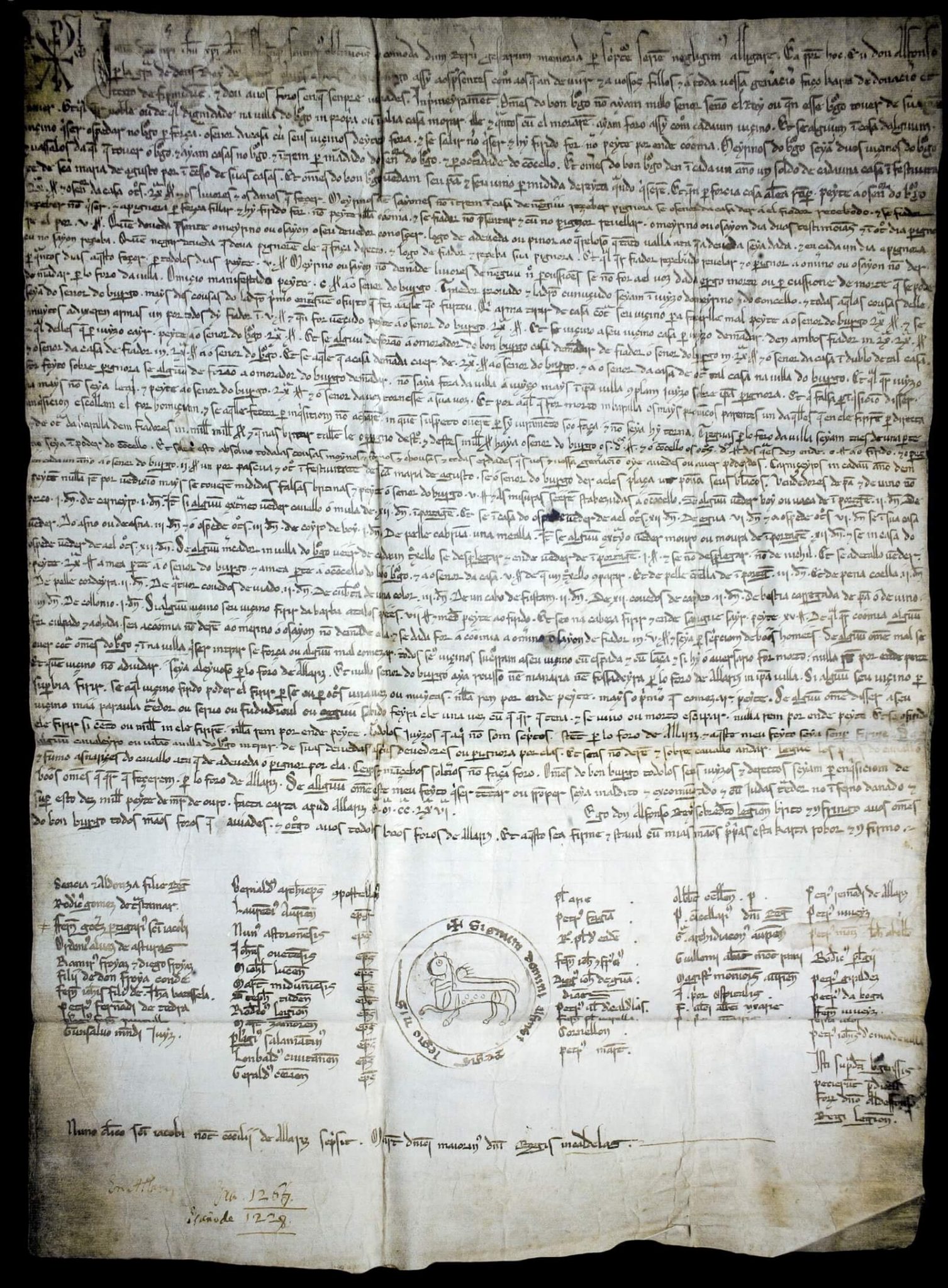
The Oldest Known Document Written in Galician

Source: Archives of the Casa de Alba via Consello da Cultura Galega and WikiCommons

The Foro do Bo Burgo de Castro Caldelas begins:

“In nomine domini nostri Ihesu Christi. Amen. Plerumque sentimus oblivionis incomoda, dum rerum gestarum memoriam per scripture seriem negligimus alligare. Ea propter hoc Eu don Alfonso porla gratia de Deus Rey de Leon a vos omes, assy aos presentes como aos que an de víír, et a vossos fillos et a toda vossa generacion faço karta de donacion et texto de firmidũe, et dou a vos foros en que sempre vivades.”

The small town of Castro Caldelas is situated in the northern part of the province of Ourense. Upon arriving, you’re struck by the beautiful view of the well-preserved castelo. With only around 1,200 inhabitants, this place proudly holds on to a deep cultural and historical heritage that begins (but certainly doesn’t end) with the Foro do Bo Burgo de Castro Caldelas.

The Charter of the Good Town of Castro Caldelas was signed by King Alfonso IX of León and Galicia and established the rights and privileges of the people of Castro Caldelas in the year 1228. It also happens to be the oldest known written document in Galician. It wasn’t the town’s first royal charter, (the earlier charter was written in Latin by King Ferdinand II of León and Queen Doña Urraca 56 years before), but Galicians hold on to this document as evidence of the prestige Galician had in the Middle Ages and should have once again.

Hiking for the Holidays

I haven’t felt ‘in the spirit’ during the holidays for a long time. Between Thanksgiving and New Years is usually the time for coming home to visit and get together with family. I’ve been away or unable to come back to California. I spent my winter vacations in Muslim-majority countries like Guinea, Morocco, and Turkey, or on the road in hostels in Sierra Leone or Colombia. Combined with my more recent uneasiness of the excessive consumption habits and waste between Black Friday and New Years and no real commitment to the Christian component of the holiday, you probably don’t want me anywhere near your holiday party.

We do our own thing wherever we are. And recently that has turned into hiking on the holidays.

When Patricia and I were in the States for the summer, I used a hiking app called AllTrails to find great loop routes that were suitable for dogs and a manageable length. But In Europe, there were fewer routes in AllTrails’ database. So I was happy to find Wikiloc, a similar community-added route database and phone app. It’s also made in Girona, Spain! Apps like this allow you to search for and record your movement to upload them for others, adding waypoints, photos, descriptions, and data (elevation change, distance, etc.).

Patricia has been taking a basketweaving course from the Escola de Cestería in Santa Mariña de Augas Santas, a village of around 50 people to the north of Allariz with an immense church. She told me how beautiful the village was, so we looked up a hike that started there on Wikiloc and took off.

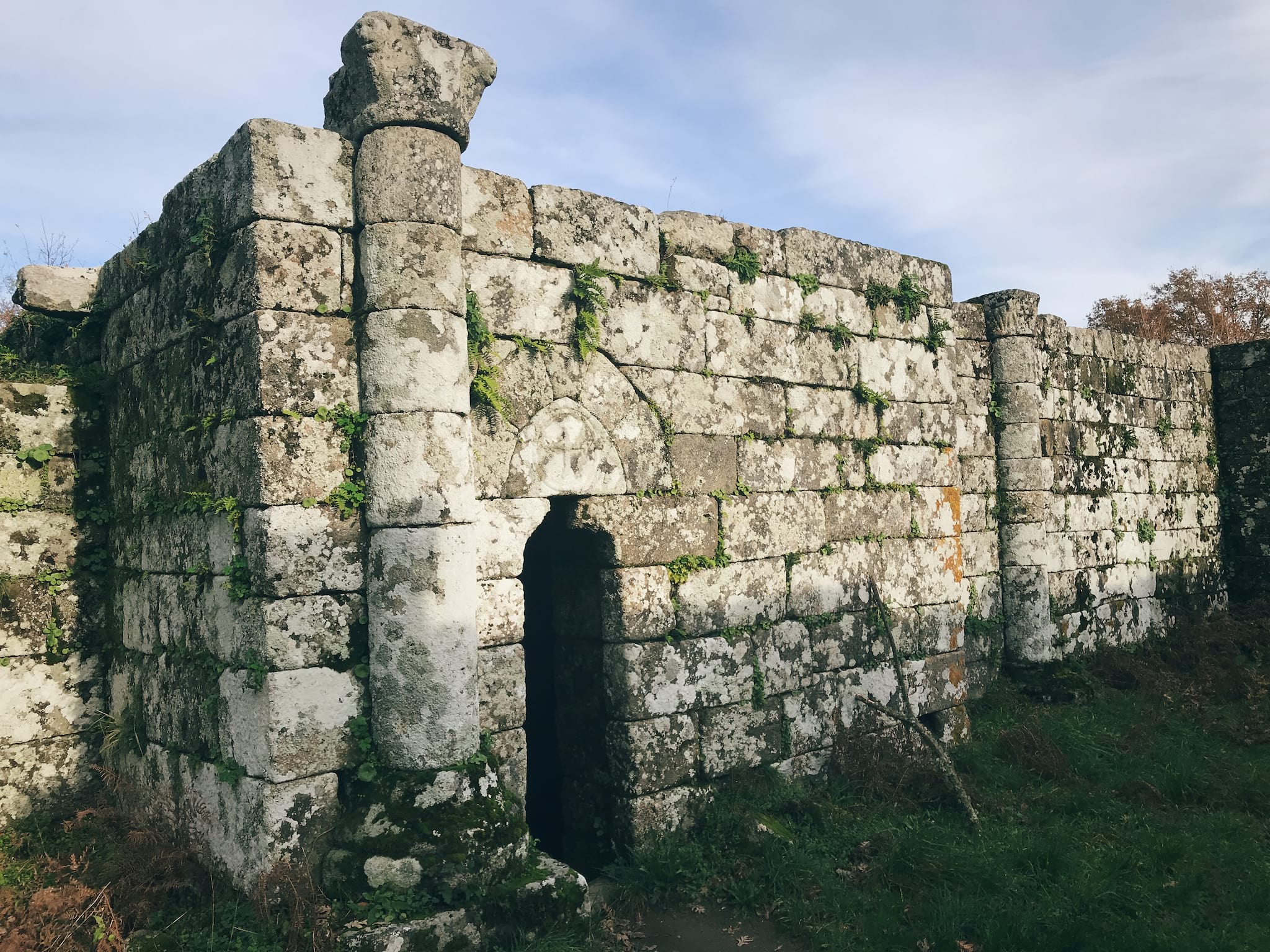
So many things about Galicia impress me. But the opportunity to easily encounter so much history in nature always leaves me dumbfounded. Spain is a living museum. And the national, regional, and municipal governments of the country, as well as private foundations and local initiatives, preserve their historical and cultural heritages. In the short hike, we encountered the unfinished Basilica da Asunción built above a crypt named Os Fornos.

It is here that the cult of Santa Mariña de Augas Santas started, a Roman teenager martyred for her belief in Christianity. From what I can understand, Santa Mariña caught the attention of the Roman prefect Olibrio, who fell in love with her, and punished her severely for his unrequited affections. She was miraculously healed from her injuries during her torture. Then, they tried to burn her alive down in the crypt of Os Fornos before San Pedro rescued her.

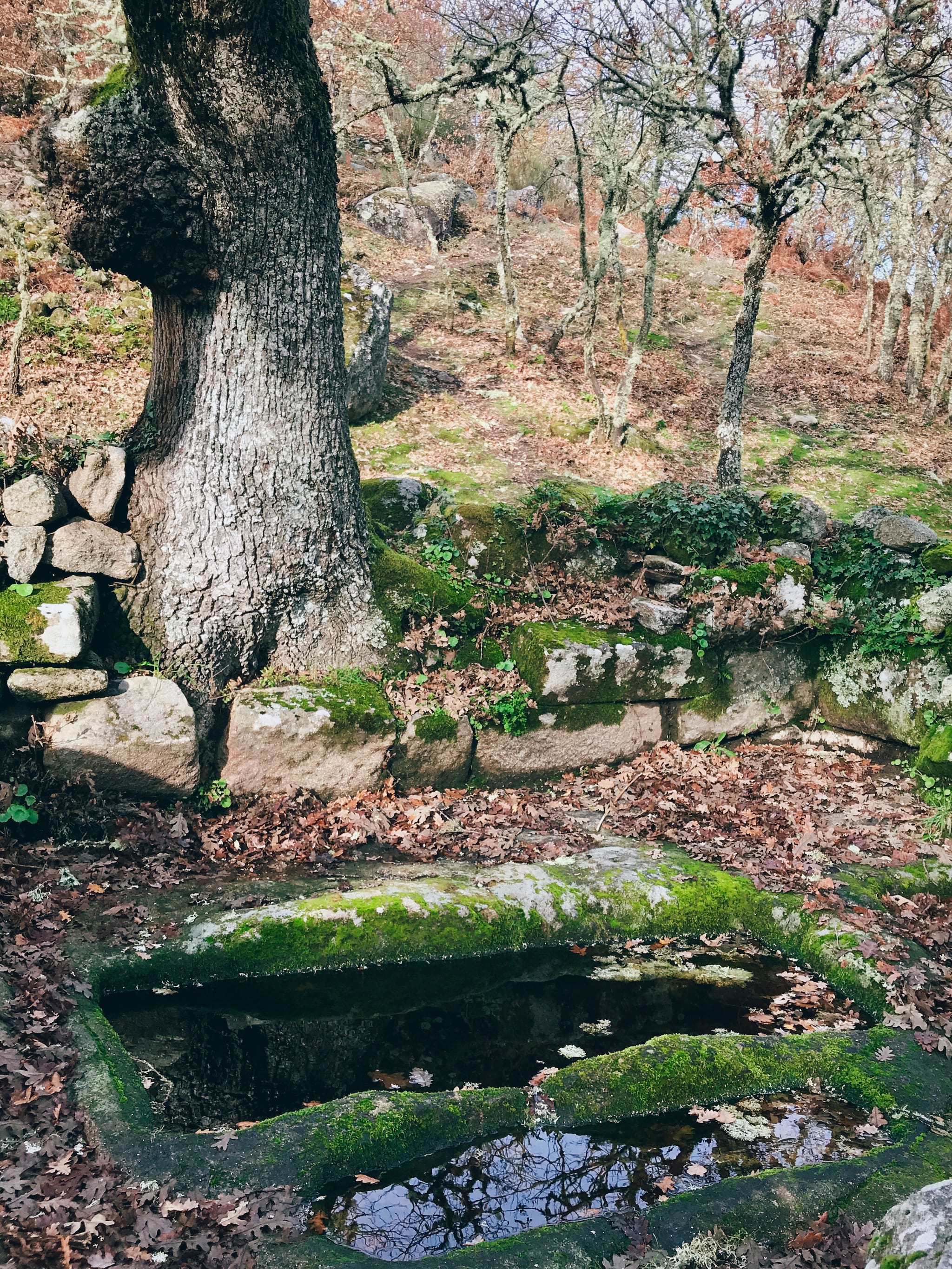
A short distance away from the Basilica and Os Fornos, we found a tree surrounded by a small stone wall and a pool of water. This is the tree under which Santa Mariña was beheaded and martyred for her Christian faith. Supposedly a spring of water welled up from the earth where her head hit the ground.

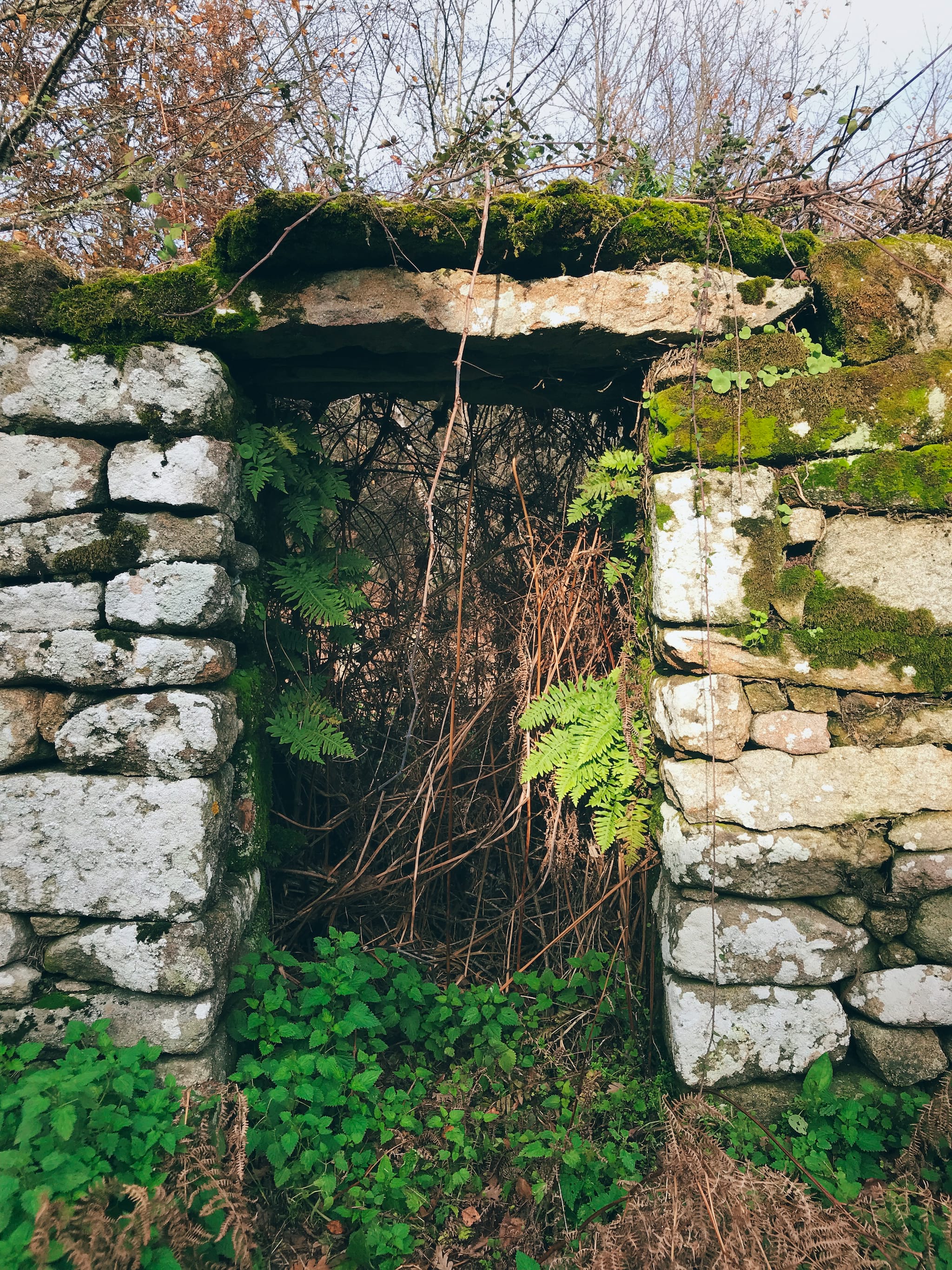
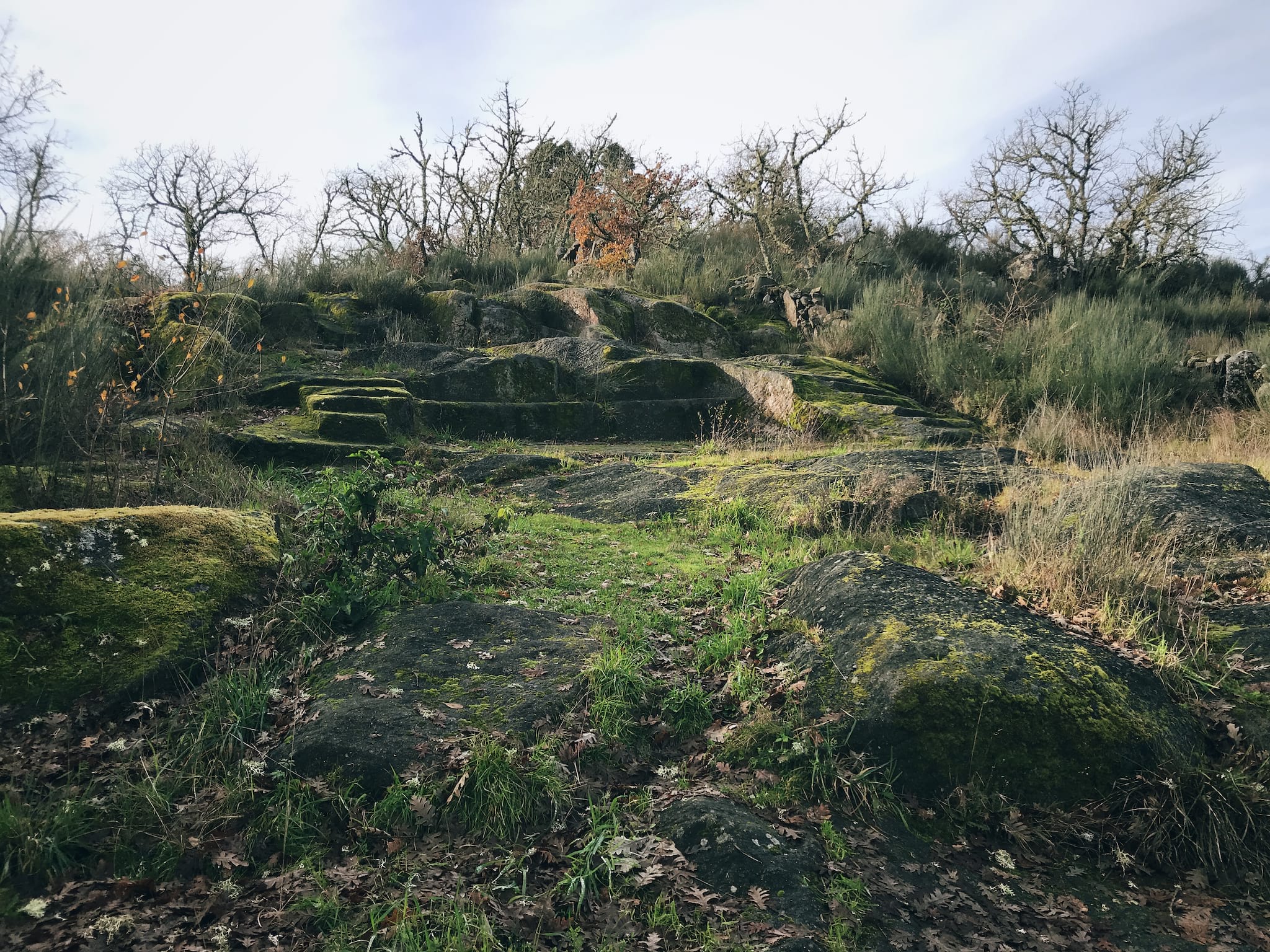
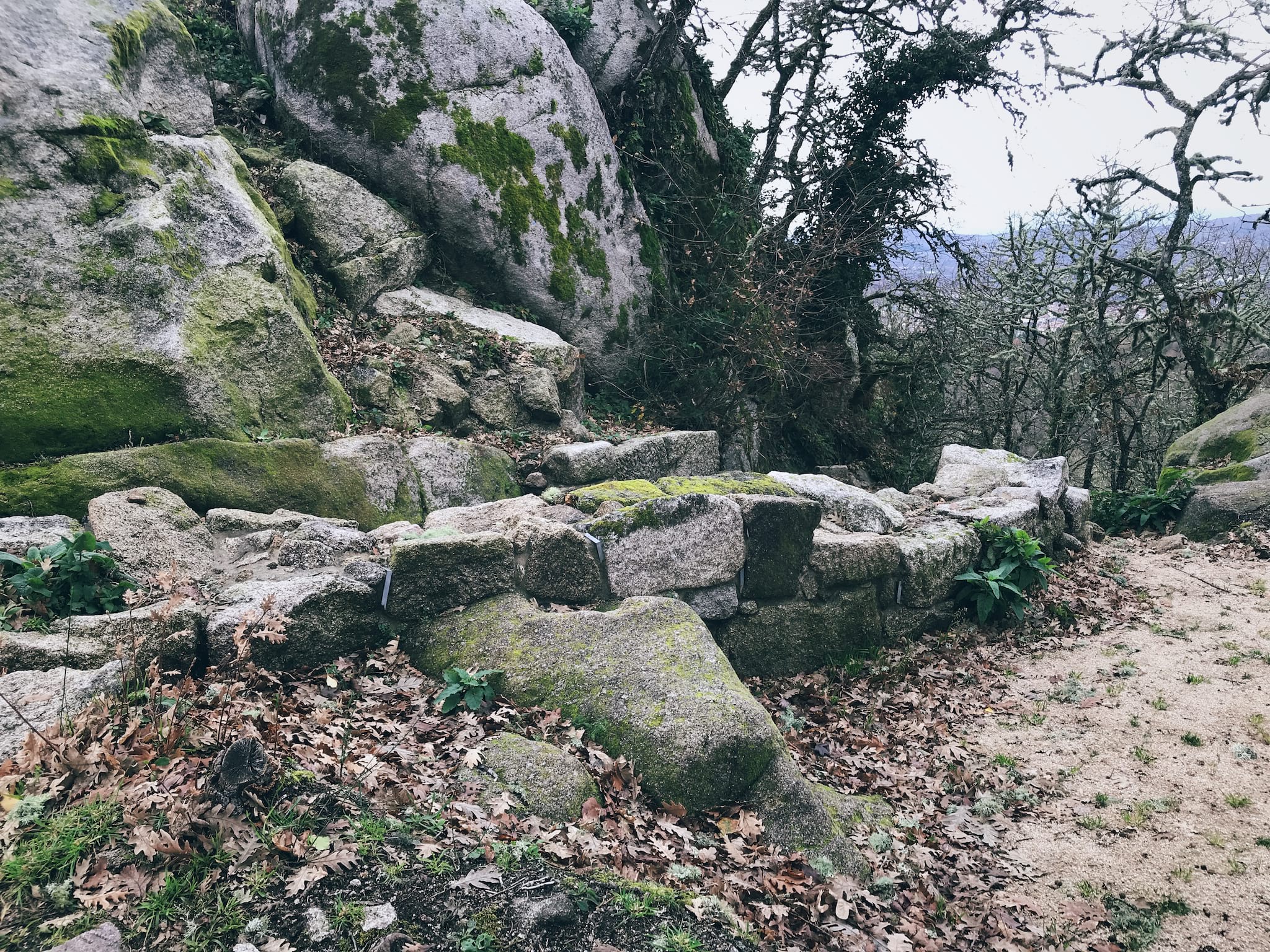
We continued the trail and looped around a bit to the small hamlet of Armeá, where a local man discovered an “enigmatic” archaeological site. Specialists hypothesize it would’ve been a big lodging for people in the first century arriving from the south of Roman Gallaecia.

Christmas Day: O San Salvador and Roimelo

On Christmas Day, we didn’t plan any hike. But a short walk up the monte to stretch our legs turned into a trip to O San Salvador, a small village up the road. The village is nestled in a small, rocky valley. Like many depopulated places, it has a church that seems enormous relative to its current population. We didn’t meet anyone who lived there, and being Christmas Day, we didn’t want to bother anyone either. I checked the census data when we returned home and in 2017, there were three inhabitants.

A few meters from the village is a path heading to a castelo. Arriving at the top of the hill, we saw some ruins but left quickly as we heard the holiday-enjoying hunters and dogs close, which usually makes us nervous with the dog.

After we arrived back home, we bought a YogurtNest, a yogurt maker and slow cooker that doesn’t require any electricity, as our gift to each other and the house.

Note: The Concello de Allariz (town hall) has a tourism page about both Santa Mariña de Augas Santas and surrounding sights and O San Salvador.

Intentions for the Next Decade

Years ago, firmly settled into my evening routine among the stones in Sierra Leone, I painted the words providence in the wilderness on my bedroom wall. Not much an artist, I used words and phrases plucked from anywhere to decorate and inspire me. A mix of something in Malcolm X’s autobiography and Robinson Crusoe, I thought I was being philosophical.

I thought it represented my past-self’s idealized trajectory; starting with being a young, confused, but lively person in the world and maturing into someone confident, more focused, spiritually satiated, sure of things. I naïvely thought age and interestingly curated living arrangements would help me with finding that providence. The years pass and I count more grey hairs in my beard, but I feel no closer to that mythical providence in the wilderness than all those years ago.

Which isn’t to say things are bad. Things are great for me, actually. But maybe it is this dual thinking that grinds on me occasionally; that I take on too many externalities, like the state of U.S. domestic politics or global opinion on the existence of a dying biosphere, that are very much out in the wilderness for me.

So, enough with resolutions or promises. I know myself. I need better habits and routines. But since I have rarely had those, I feel more comfortable bringing a few intentions to the coming ten years.

  • Read more for pleasure, less for knowledge
  • Don’t be afraid to show yourself
  • Be mindful of spreading your general positivity too thin
  • Create something
  • Cut out distractions

Happy 2020.