Phase 3 to la Nueva Normalidad in Galicia

The Xunta of Galicia, the autonomous community government, will allow inter-provincial travel as the region enters phrase 3 of the deescalation/transition starting Monday (along with 46% of the Spanish population in other communities). Phase 3 will be directed by the autonomous governments rather than the national government of Sanchez, and they will decide when they are ready to transition out of phase 3 to the “new normal”.

Galicia has long petitioned for inter-provincial travel during these phases. I’ve seen some interesting stories about people living next to provincial borders not being able to easily get groceries, as the market is in the other province. In fact O Bloque Nacionalista Galega, the left-wing Galician nationalist party that holds one seat in the Congress of Deputies, has abstained from Sanchez’s state of alarm renewals due to this unrequited request.

Galicia with a population of 2.7 million, currently has a total of 11,172 COVID-19 cases with 609 fatalities. The cases per million is 4,138 and the fatalities per million is 226. Of the 17 autonomous communities and the 2 autonomous Moroccan enclave cities, Galicia falls about in the middle of severity in cases and deaths.

Personally, this means we can cross the río Sil and explore Terra de Lemos, the heart of the Ribeira Sacra, in a few weeks on a first road real van trip of the year. The van life is excellent for maintaining social distance I might add. After that, we plan to head back to Rías Baixas on the coast for a few days of beach before all the madrileños are able to make their post-coronavirus summer holiday exodus from the capital.

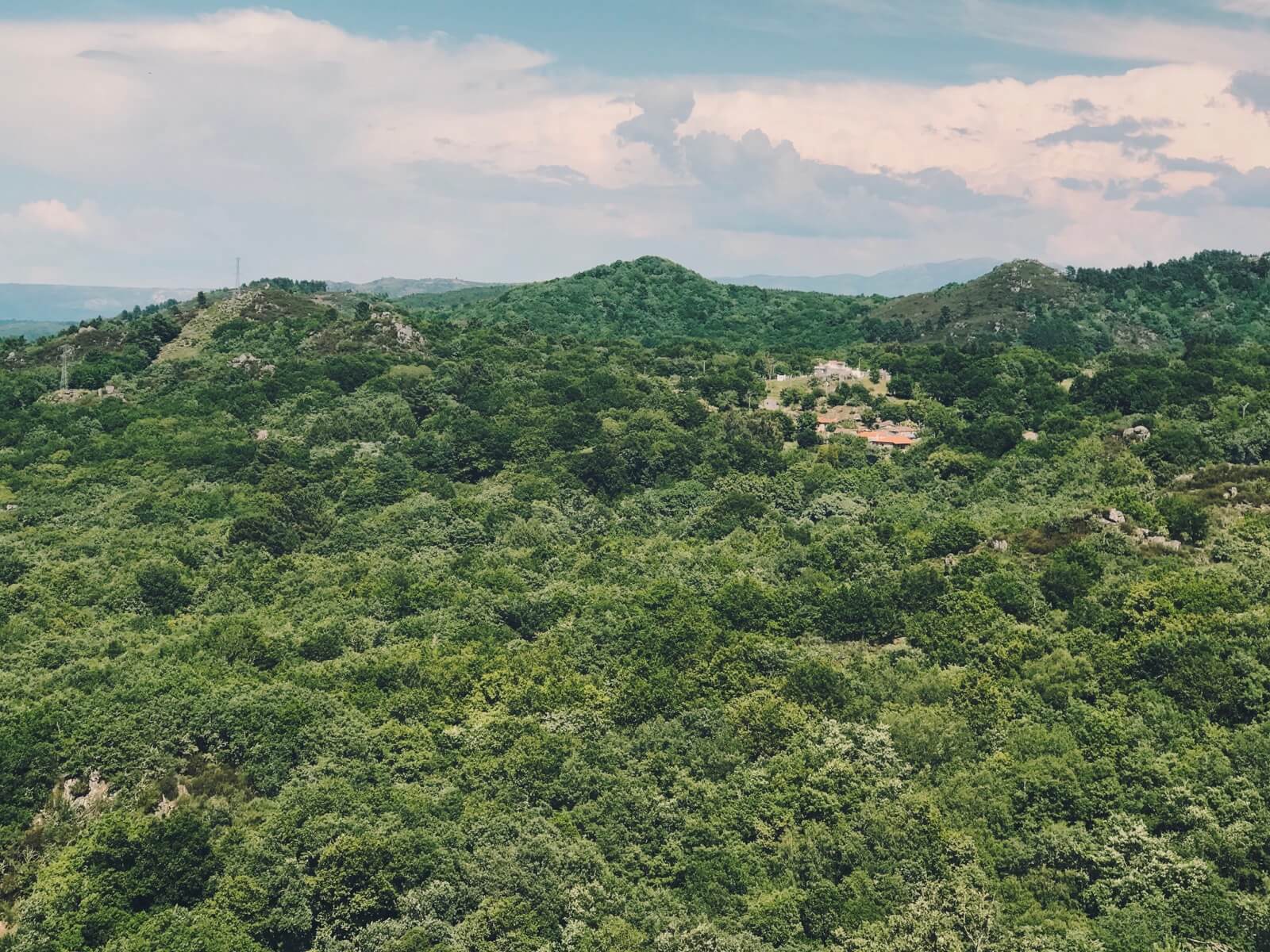
While I still love our village and the adjacent town, I’m ready to move around responsibly, hike, take photos of something other than the monte, enjoy the spring and summer weather, and take advantage of all that Galicia has to offer.
New Tightrope

A silver lining of the quarantine, the intentional go-slow of the Earth’s populace, is the chance to see something new in the everyday. A quotidian walk becomes utterly fascinating if I see the neighbor’s kitten in a tree, whose hunter’s gaze is fixed on a bird out of range. Or the new colors in the horizon at sunset that I haven’t been aware of or seen yet. Moving here in mid-autumn, every week has brought changes to the monte, the agricultural activity of our neighbors, and my feelings of staying put.

I tested out my microphone yesterday, recording a little bit to experiment in Ferrite. I plugged it into my phone, used Røde’s Reporter app, and used the normal white earbuds as monitors. Strangely, I don’t mind the sound of my voice, only the occasional cadence it takes. But talking to myself down in my basement is something I’ll have to get used to. I do want to have conversations with others as well. We’ll see what comes out of it. I’ve decided on the name Left Abroad. Hopefully a short episode #0 introduction will be released in a week.

There have been rebrotes, new outbreaks here in Spain. The Alcoa plant in Lugo is shutting down, en plena pandemia, laying off over five hundred workers. There is an uprising across the United States. I have a tendency to be digitally swept up in the fervor. But I have to remind myself to stay grounded, even in uncertainty. The future will be strange. But I’ll keep enjoying the new colors of blooming flowers, the shape of the clouds, and the warm air at night, because I’ve gifted the circumstances to be near to them.

Unified Veranda Theory

It’s my Saturday today. I’ve been out on the terrace, watching the fig tree away with the breeze. There are more insects buzzing, snails crawling up the stone walls, and birds darting between the electrical and phone lines that surround our house. I’m also playing around with the vintage camera app Vooravo for some retro-looking photos around the house. I’m bored of photographing the same trees from the well-worn paths of the monte.

This is one of those weekend mornings that reminds me of my years in Sierra Leone; the unhurried day, the privilege of watching time and life of the village pass by from a veranda, the warm sun on my body, the ability to read as much as I want to.

Grateful and guilty, which has been a recurring tension during the lockdown. Grateful to have had the privileges and opportunities to organize my life in this manner, and guilty knowing that not everyone is so lucky. But I know I’m in my head a lot, and that guilt will lead to paralysis or unnecessary suffering.

I misread a quote from some article a few weeks ago. In my head in went something like;

The best safeguard to life under late capitalism is withdrawing from it.

But it actually wasn’t that, at all. It was a critique, that the privileged ones, the ones with an inessential, work-from-home job are the ones who can safeguard themselves from coronavirus.

I recently talked to a friend, a madrileño musician from West Africa with a similar practical philosophy. He mentioned the protests in barrio de Salamanca and the incessant material desires that nag certain classes of people in the capital. It feels foreign, otherworldly. That wasn’t always the case, but a product of half of my life, maybe started after they extubated me. Who’s to say. But I think it’s possible that most can come to the conclusion that infinite growth on a finite planet is illogical.

We can thread the needle, withdraw from the capitalist mentality without completely withdrawing from society like Christopher McCandless; plant a garden, reduce costs and discourage consumption habits, prioritize immaterial experiences, read books, go for walks, re-valorize the countryside, or enjoy voluntary frugality in the city. Flatten the curve of coronavirus and of climate change by socially distancing and driving less, flying less, removing animal products from my diet, eating seasonally and locally. Prefigure a better world by thinking, talking, and planning other ways of organizing life and social relations. Want less, need less, and perhaps work less because of those priorities and that organized withdrawal.

For now, I’ll “do praxis” by non-participation, as much as I can, and theorize by writing into the void, ruining conversations with family and friends by talking climate, and reading Bookchin in my hammock. And I’ll never forget to enjoy the conference of the birds on the phone lines.

Día das Letras Galegas

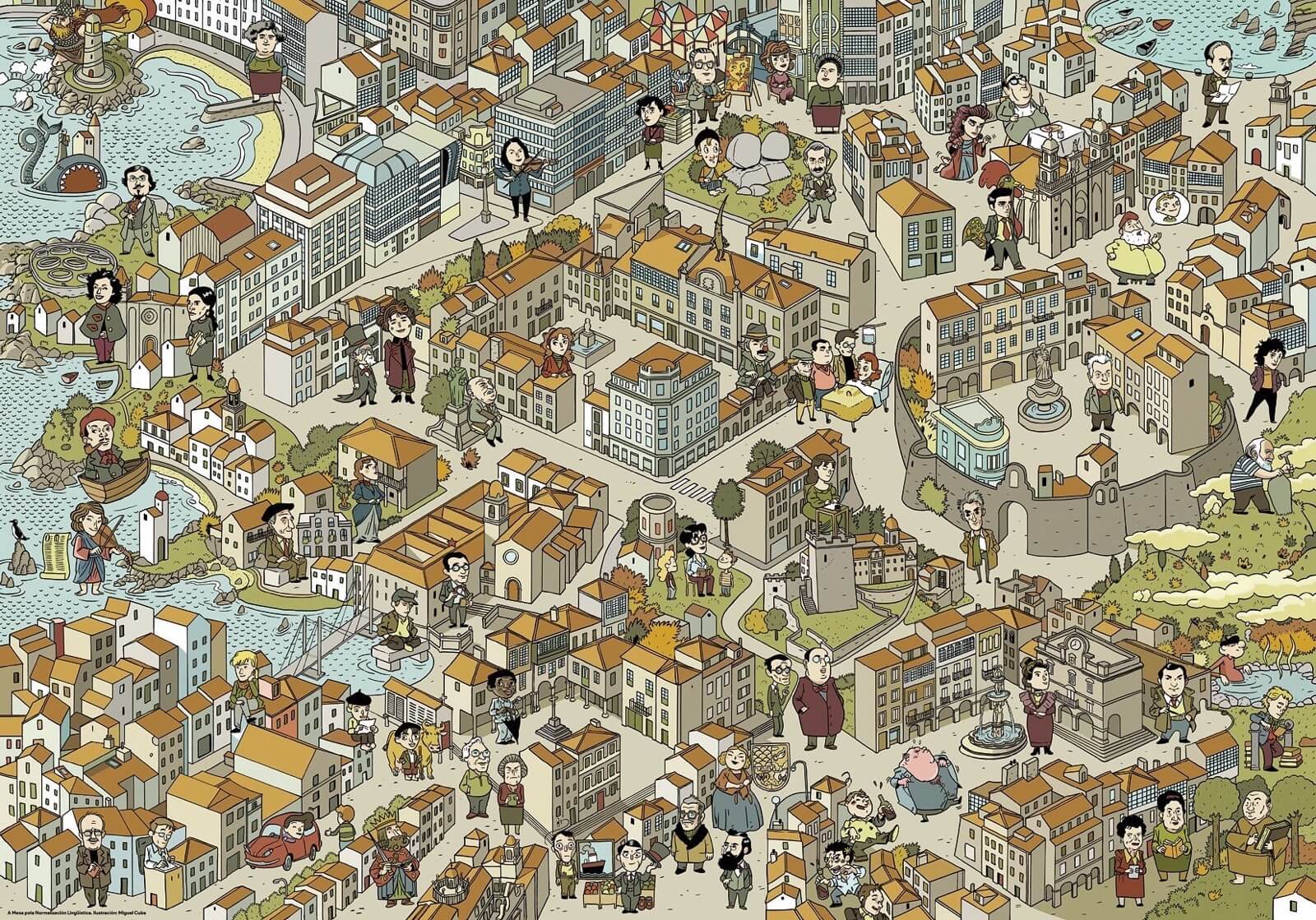
Source: A MESA pola Normalización Lingüística

“A land with trees in the hills is worth more than a state with gold in the banks” — Castelao

Yesterday was Galician Literature Day, a public holiday here in the northwestern Spanish community/nation. It started in 1963 marking the centennial Rosalía de Castro’s book of poetry Cantares Gallegos. Every year since, the Royal Galician Academy picks one Galician writer to celebrate. This year, under quarantine, it was Ricardo Carballo Calero.

Calero was a lifelong republican and Galician nationalist and fought for the Second Republic against the fascist rebels. He was captured, spent some time in prison in Andalusia, and was released some years later. But Calero is most known for his scholarly work on Galician literature and language. He was a member of the Royal Galician Academy, an expert in the work of Rosalía De Castro, and the first university professor in the field of Galician linguistics and literature, which was suppressed during the Franco regime.

He is also known for his theory on reintegracionismo. Galician is actually closer to Portuguese than Castilian Spanish. In fact, Galician is the mother language of Portuguese. Calero was the first to systematically study the origins and etymology of the Galician-Portuguese proto-language and its progeny. He believed that the two languages are actually just variants of the same language rather than two distinct languages.

When the fascist regime ended with Franco’s death, Galicia became an autonomous community, with both Galician and Castilian Spanish its official languages. Calero was designated to lead a group to develop an orthographic norm. Using Portuguese as a guide, the group postulated a gradual return, a reintegration with Portuguese. But this was seen as anti-Spanish, so the norms were scrapped, Calero resigned, and formed the Galician Language Association with reintegracionismo as its goal.

The subject of the Galician language is super important in the community. While the cities are thoroughly castilianized, especially Calero’s birthplace of Ferrol due to the Spanish navy’s port the, Galician reigns supreme in the rural areas. There are many dialects. With the imposition (and some say mismanagement) of the Galician language in schools, a new generation of neofalantes, speakers who did not learn Galician at home, are beginning to use the language as a vehicle for a second cultural, political, and social renaissance.