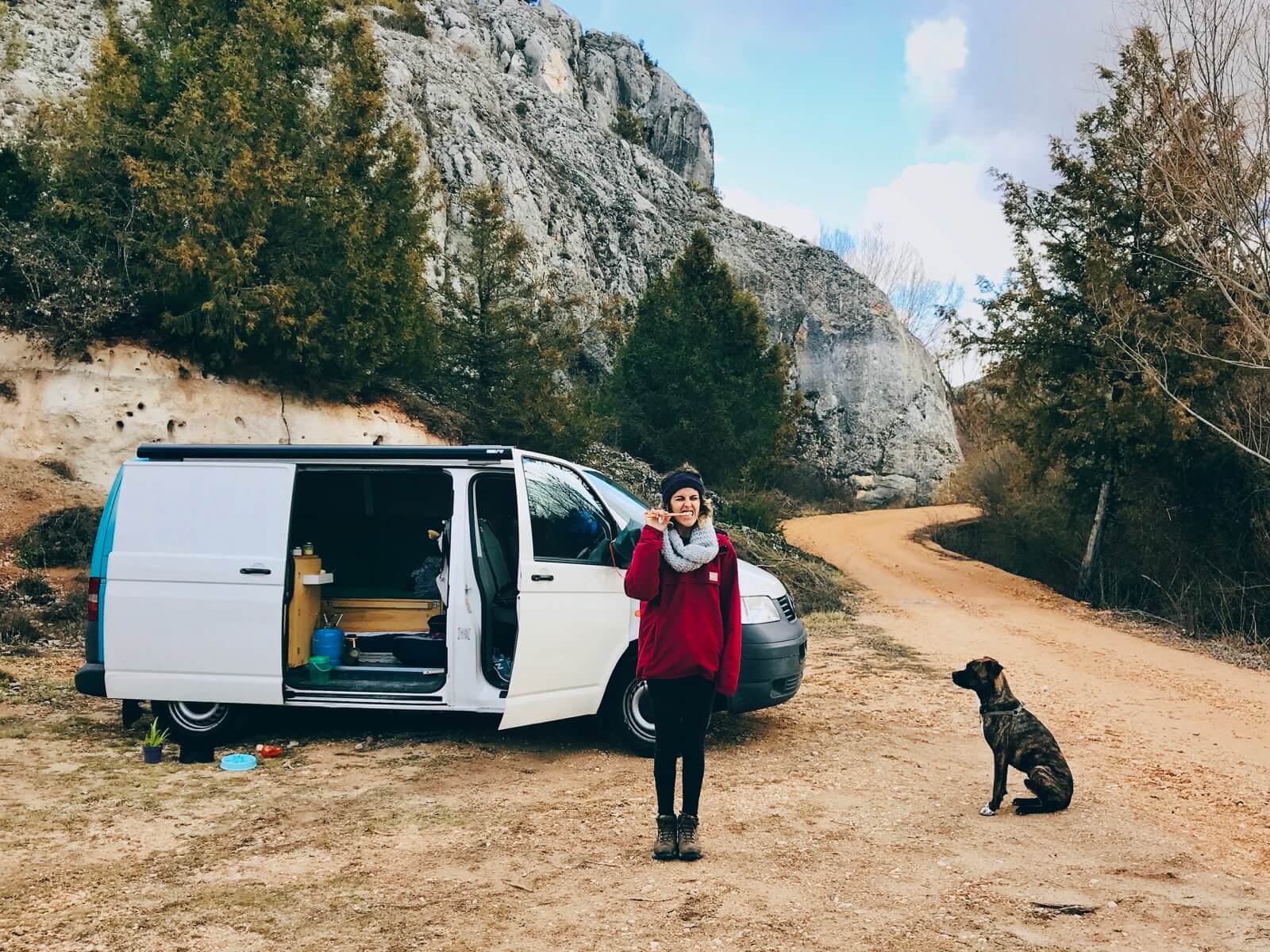
2019 Recap Video, Weekday Weekends

Patricia put together a great video of video clips from our Latin America trip and a couple days ago did the same with everything we’ve filmed from 2019. It features building the inside of our van with a family friend, a three-week trip through Andalusia, moving to Germany, moving to Galicia, a tuktuk ride in Porto, and the last few months of the year here. iMovie crashed a repeatedly while trying to export on her small MacBook Air. We were finally able to get it into a movie format by importing it into iTunes first. It was nice to reminisce, even though we felt like the whole year we were a bit lost as to what we needed or wanted to do. The photo is one of our first mornings on the way to Andalusia.

This year, a global pandemic and approaching financial crisis aside, I feel much more steady about our family’s priorities. We’re ensconced in Galicia and while we still want to hop in the van for a road trip soon, we both want to return and make a home here.

Tuesdays and Wednesdays are our weekends now. I took off both days for classes the last few weeks and it’s been super relaxing to have two days without thinking of teaching instead of my usual one. Patricia is also stepping away from her business those days to enjoy the early spring with me. We were able to get a few bureaucratic errands and house cleaning done one day, and had a nice walk halfway to Penamá.

Warmer and Freer

I can once finally go outside in the morning with shorts and sandals. The weather is still a little cool, but it’s a pleasant change from always being bundled up for most of the winter, even inside our house.

A few weeks ago, I woke up to a smoke-filled house and a malfunctioning pellet heater. That scared us enough to not turn it on again until someone came to look at it the other day. We think there was a small gap in the pipe leading out of the ceiling and the ashes. Unclear if he solved the problem, but luckily we’re getting to the season where we don’t need it.

On Monday, all four of Galicia’s provinces will be promoted to phase 1 of the deescalation plan. Notably, Madrid will stay in phase 0. But here, we’ll be able to:

  • gather in groups of up to ten people while maintaining social distancing. Luckily we have about four friends here plus their kids!
  • drive in the van together. For the whole quarantine, we have separately driven down to town to buy groceries or to the post office and back up. We’ve saved quite a bit on gas.
  • sit at a terrace restaurant of 50% of its normal occupancy. We’re both not desperate to do this, as we rarely ate out before the pandemic.
  • visit the countryside and beaches in limited groups within the same province. The last few weeks with the warming weather, I’ve daydreamed of taking the van out and camping in the middle of nowhere once again. It’s been so long.
  • use the gym, but not the changing rooms and by appointment. I finally developed a good routine of going to the gym before the virus came and I hope to be back soon, but I’ll be waiting much longer until things are calmer.

I expected to be in quarantine for much longer, but it seems we’ll make it out of this first wave and finish our different phases by late June. Other than possibly seeing a few friends from a distance here and my in-laws at the coast in July, I’ll be maintaining my social distant vigilance for quite awhile.

14 Ramadan: Ignite the Divine Engine

People who have never tried fasting before are astonished to contemplate not eating or drinking all day. But it becomes easier as one moves through the month of Ramadan. A rhythm is introduced; perhaps different than normal. Maybe your sleep schedule is different. You find something else to do during lunchtime. I find the change itself beneficial, especially during the quarantine.

I’m still being a bit stubborn. Other years, I’ve given up coffee for the month. This year, I didn’t dare think of it. In the early morning, I drank a cup (usually it’s two) before having the leftover vegan pizza from the iftar last night along with dates, cashews, almonds, cranberries, and homemade soy yogurt.

Spain is deescalating the estado de alarma with a series of phases. Each phase lasts approximately two weeks and gives more freedom of mobility to individuals and businesses. By late June, if there isn’t another big outbreak, spain will have transitioned into la nueva normalidad. There are still fatalities from COVID-19, however.

Even though it’s the fourteenth day, the 13th part of the Qur’an has one of my favorite verses:

“God does not change the condition of a people until they change what is within themselves.“ [13:11]

People who are skeptical of any religion or supernatural/unexplained phenomena in the world constantly wring their heads about why God would allow poverty to exist. But we allow it to happen. All the conditions are there for us to eliminate this, if people awake from their materialistic, individualistic stupor. We are connected to each other, our earth, and everything else within creation. We have the technology and resources to do away with poverty and cancer. We simply do not act on this on a big enough scale for us to achieve utopia in the here and now.

On Lamp of Islam, I came across a great response to the question of the mosque-goers during the pandemic.

God, according to the Quran, is not an external entity/deity that is separate from everything. He works through His laws, manifested to our perceptions as laws of nature…

Though it is God who is the ultimate ‘doer’, it is through His agencies that He eventually actualizes His will to ‘do’ the things. On this particular occasion, when some people are dying from the coronavirus pandemic because of going to the mosques, the agencies involved in actualizing God’s will are mainly these people’s own irresponsible actions.

The Quran relentlessly calls on us to act, to remember the law of consequences and to live so consciously that we feel morally accountable for our own actions.

Read the full response, along with cross-referenced verses.

Exiting My Own Vampire (Sand) Castle

For Ramadan, I decided, along with food and drink, to fast from Twitter.

I use Instagram sometimes, but I don’t scroll much. Its icon is hidden in a folder on my phone and I have a 15-minute daily limit enabled. I deleted Facebook in 2012. But Twitter was really my place. Short-form information, headlines, jokes, all of that. It first caught my interest before leaving for the Peace Corps. An acquaintance from San Barbara was serving in Guyana. He was able to tweet on a basic Nokia using SMS to a specific number. I must have deleted my account before leaving for Sierra Leone because I didn’t use it during my time there. But I signed up again on the road in Guinea after my service. Coming home, I saw that we were all living inside the smartphone epoch. Before I left, I could count the number of people who owned an iPhone on one finger. When I returned and boarded a train from Portland to Los Angeles, I was practically alone with my newspaper, book, and magazine on actual paper.

I used some of my readjustment allowance to buy an iPhone 4S and Twitter was one of the first apps I downloaded. I enjoyed hearing from and having (para)/social interactions with people in the African studies/geopolitics world. It provided some escapism during my five months back home, unemployed and transformed from an intense 27 months.

But Twitter, my relationship to it, and the world are all very different now. My attention span is much shorter (it was already pretty short). I’m older, less relativist in my ideology. The president is equally…

Justifying my continued usage fluctuated depending on the argument; it’s a news source, a way to stay engaged, or an amplification tool from people not connected to media or hegemonic cultural gatekeepers. Whatever the downsides to it that were presented, I had a reason to hand-wave it away.

But my presence on Twitter has intensified in the last few months. During the quarantine, sure, but especially during the democratic primary season with Bernie Sanders; those heady days after the Nevada caucus when, astonishingly, it looked as though an open socialist could take over a party of capitalists, who have only triangulated themselves in recent years in their opposition to the odious president. I admit it, we got a little carried away, thinking the split neoliberal centrist politicians would not be able to cohere and stop Sanders, and it was extremely enjoyable to revel in that online with others who felt the same. That feels like years ago, and looking back on it, also naïve to think it was a possibility.

I have five-minute breaks between classes; short enough to not really be able to accomplish anything. So I’d check the timeline. Or in the afternoons when I was working on a website, I’d dip in practically as a reflex.

I took this post’s title (and played with it) from a Mark Fisher essay about online leftist drama, which is what inspired my reevaluation the day before Ramadan anyways. As is usually the case, it does not directly correlate, but is still a good read. Essentially, it’s disheartening to watch the cannibalization of prominent leftist voices over what I believe to very specious accusations. As Matt Christman from Chapo pointed out on a long-winded talk recently, Twitter is structurally incapable of actually resolving conflicts and coming to consensus. It incentivizes dog-piling and taking a maximalist position on any issue for performative reasons.

So, Twitter and I are on a break for Ramadan.
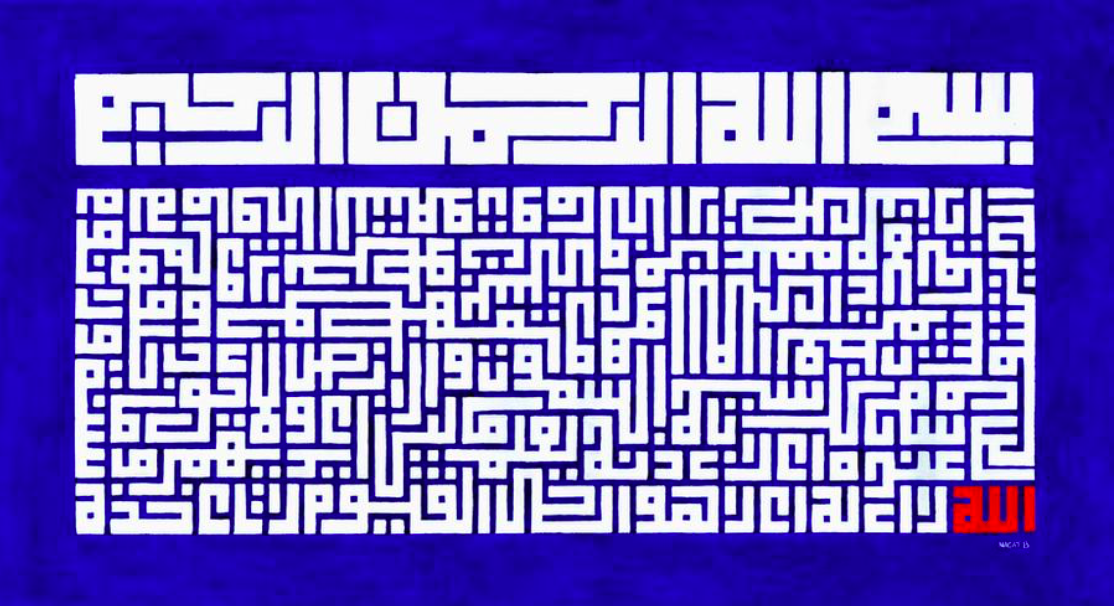
3 Ramadan 1441: Watch the Throne

Source: DeviantArt

The Qur’an’s third thirtieth part includes the powerful Verse of the Throne, which is often displayed in homes in beautiful calligraphic styles.

Allah! There is no God but He,
the Living, the Self-subsisting, the Eternal.
No slumber can seize Him, nor sleep.
All things in heaven and earth are His.
Who could intercede in His presence without His permission?
He knows what appears in front of and behind His creatures.
Nor can they encompass any knowledge of Him except what he wills.
His throne extends over the heavens and the earth,
and He feels no fatigue in guarding and preserving them,
for He is the Highest and Most Exalted.[2:255]

A king’s symbol of authority is his throne. The kursī of God, however, can be interpreted as the knowledge of all that is.

Al-Mālik, the Sovereign, rules not by force, but through immutable natural laws, and through the global community of believers, Muslim or not, who adhere to the principles of justice and most accurately articulated in the Qur’an. After all, we are the vicegerents, the stewards, of Earth.