Thinking Degrowth, With Eyes Toward the Sacred Riverside

Day 24 here in Spain and the coalition government under Sánchez a few days ago announced it will extend the state of alarm until at least 26 April. After that, there might be an easing of restrictions until we’re out of the peak. The daily casualty rate is still high but has been going down for a few consecutive days. In the mornings, I don’t at the numbers like when it was still new and shocking.

I support as little movement as possible. Just writing that feels strange, because my position on travel and movement has shifted so considerably. I am one of the global 20% of the world who has ever flown on an airplane. Comparably, I guess I used to fly regularly. Now, it’s been 17 months since coming to Europe.

My livelihood doesn’t depend on going out on the streets. I’m not an essential worker nor a healthcare professional on the frontlines. Aside from the massive casualties COVID-19 has inflicted upon this country, the economic aftershock will stay with us for quite some time and I really worry about the social and political consequences. This is true for the world.

“There are decades where nothing happens; and there are weeks where decades happen.”

The troika of crises we confront; coronavirus, capitalism, and climate have further pulled me into a web of poignant questions. It’s Phase II; a shedding of what was considered normal before this, accepting new paradigms, and being prepared for either the coming socialism (it’s visibly obvious capitalism is incompatible with low-carbon future survival) or the coming barbarism.

Today was windy and rainy and it was easy to stay inside. I’ve been reading Kropotkin, waiting for a few other books to arrive. I hate Amazon, more so hearing about Chris Smalls being fired and the lies they spun about him, and really work to not rely on them as much as possible. I ordered about 8 books, most of them well over a thousand pages each, I don’t see myself using them soon. I do not link to Amazon in any way on this blog.

I was also reading about degrowth. I first heard the word in Jonathan Franzen’s Freedom. It’s a critique of our globalized overconsumption. Why is it that the economy crashes when people only buy the things they really need? Most of us understand, communicated by scientists, that the planet has a few years before we head into unforeseen climate tipping points. We acknowledge that we shouldn’t fly so much anymore and we should buy more locally.

If COVID-19 and other animal viruses were caused by the human-animal interface, pushed ever more closer by deforestation practices and rapid industrialization, then we should all be thinking very seriously about how to scale things back, and fast. The myth of “infinite growth on a finite planet” has been shattered. A tiny virus has brought the whole planet to our knees with humility (with some exceptions).

In an article in The Ecologist to promote an upcoming book on the topic for Pluto Press, Anitra Nelson and Vincent Liegey write:

Efforts to slow the spread and contain this coronavirus highlight the fragility of urban living, massive socio-economic inequities, of production for trade, a fragmented and globalised supply chain and just in time supplies — all characteristics of advanced capitalism.

Neoliberalism has led to under-resourced and overburdened health systems relying heavily on global supply chains that have fractured and warped as borders and work places close — colliding with urgent and massive demand.

No crisis could so sharply throw into relief the fragility and precariousness of capitalist societies characterised by globalised production for trade and profits; weak states led by bureaucratic elites; and a citizens experiencing anomie, individualism and alienation. But this is not a wholly new crisis, rather just a variation on an old capitalist crisis theme.

The problem is that the ruling class will have very little incentive to change course. Businesses and governments will try to bring us back to normal. But what is normal and should we even try to go back to it? This is my issue with one democratic presidential candidate who thinks of Donald Trump as some aberration. Normal is untenable.

I live in the privileged rural. Actively choosing to de-urbanize from Los Angeles and Cologne in search of a closer relationship with the natural world, not enticed by centers of culture, maybe this line of thinking comes easier to me than others.

The article finishes with this:

Degrowth advocates using one’s legs, bicycles and, to a small extent, public transport. In contrast the current coronavirus pandemic has clearly been spread much more rapidly due to travellers using aeroplanes and cruise ships. In short, another world is not only possible but also preferable.

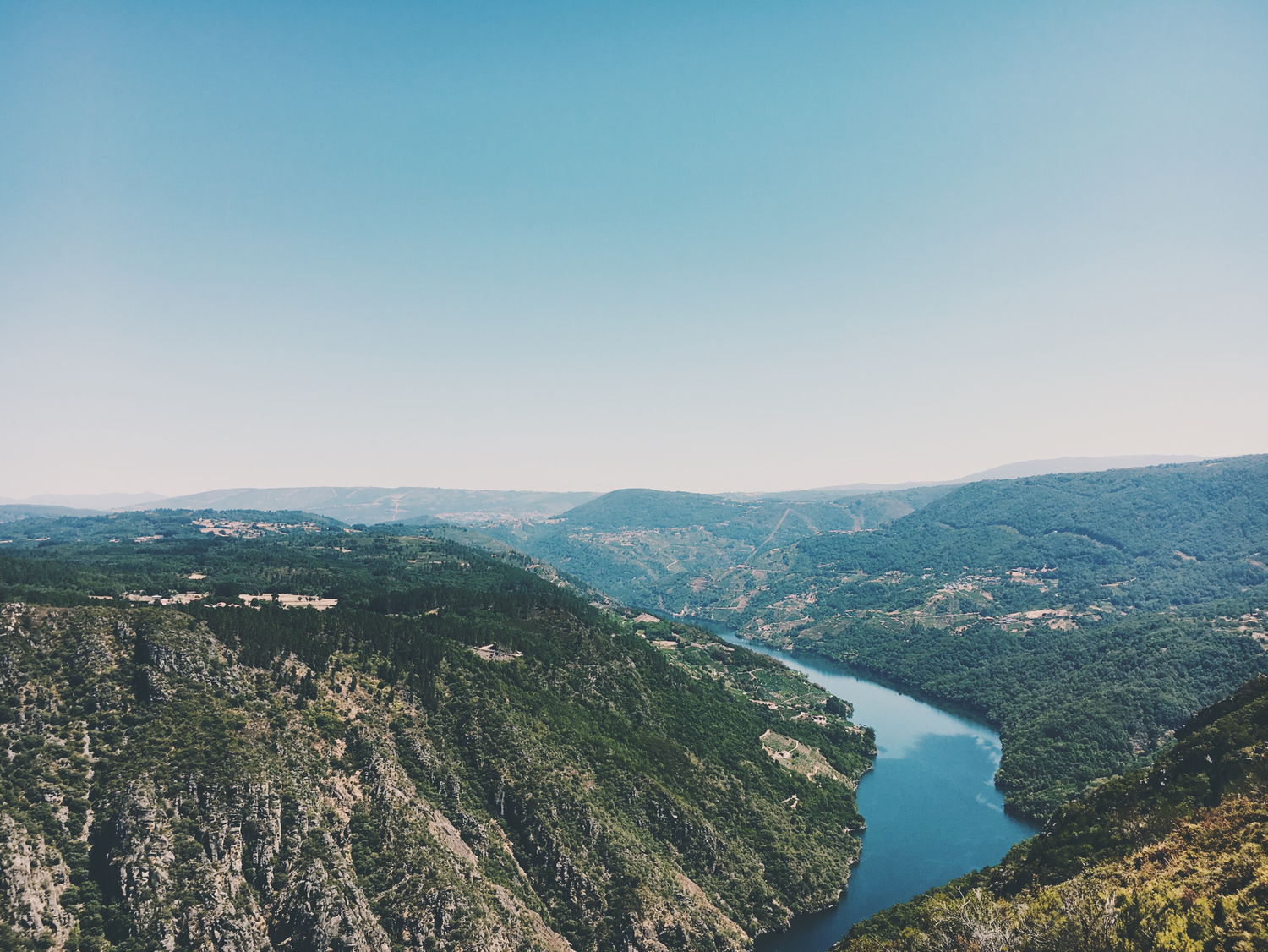
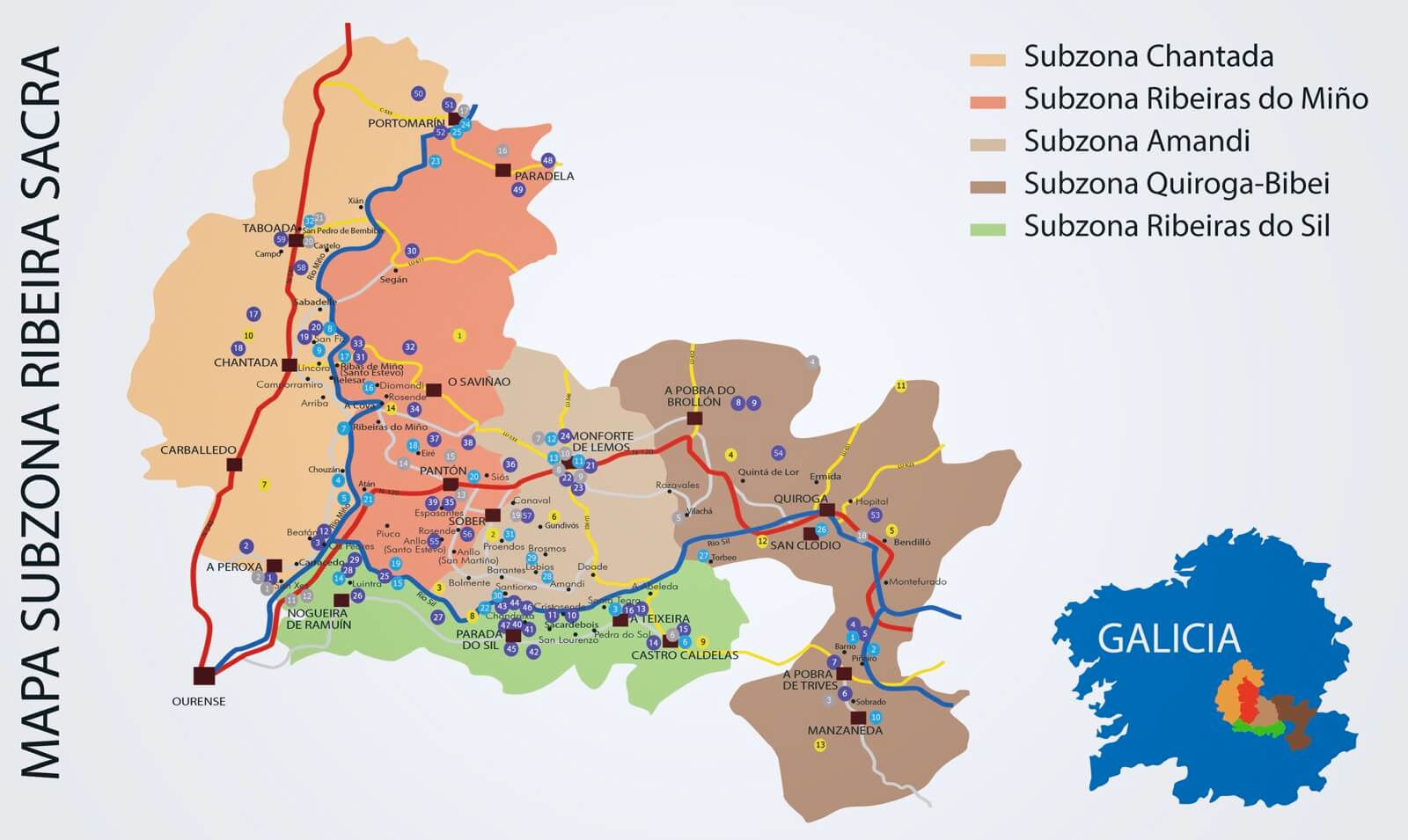
With all this, I think of A Ribeira Sacra, the sacred riverbank in the heart of Galicia. The Ribeira Sacra is a canyon carved out by the the Sil River that straddles the provinces of Ourense and Lugo. It’s called the Sacred Riverbank in Galician because the once isolated region is home to many Romanesque monasteries from the early Middle Ages, whose monks and hermits continued cultivating vineyards and producing wine, like the Romans before them, on terraced edges of the canyon walls. It is also shortlisted for a UNESCO World Heritage Site in 2021.
Source: Viña D’Mateo Wineries

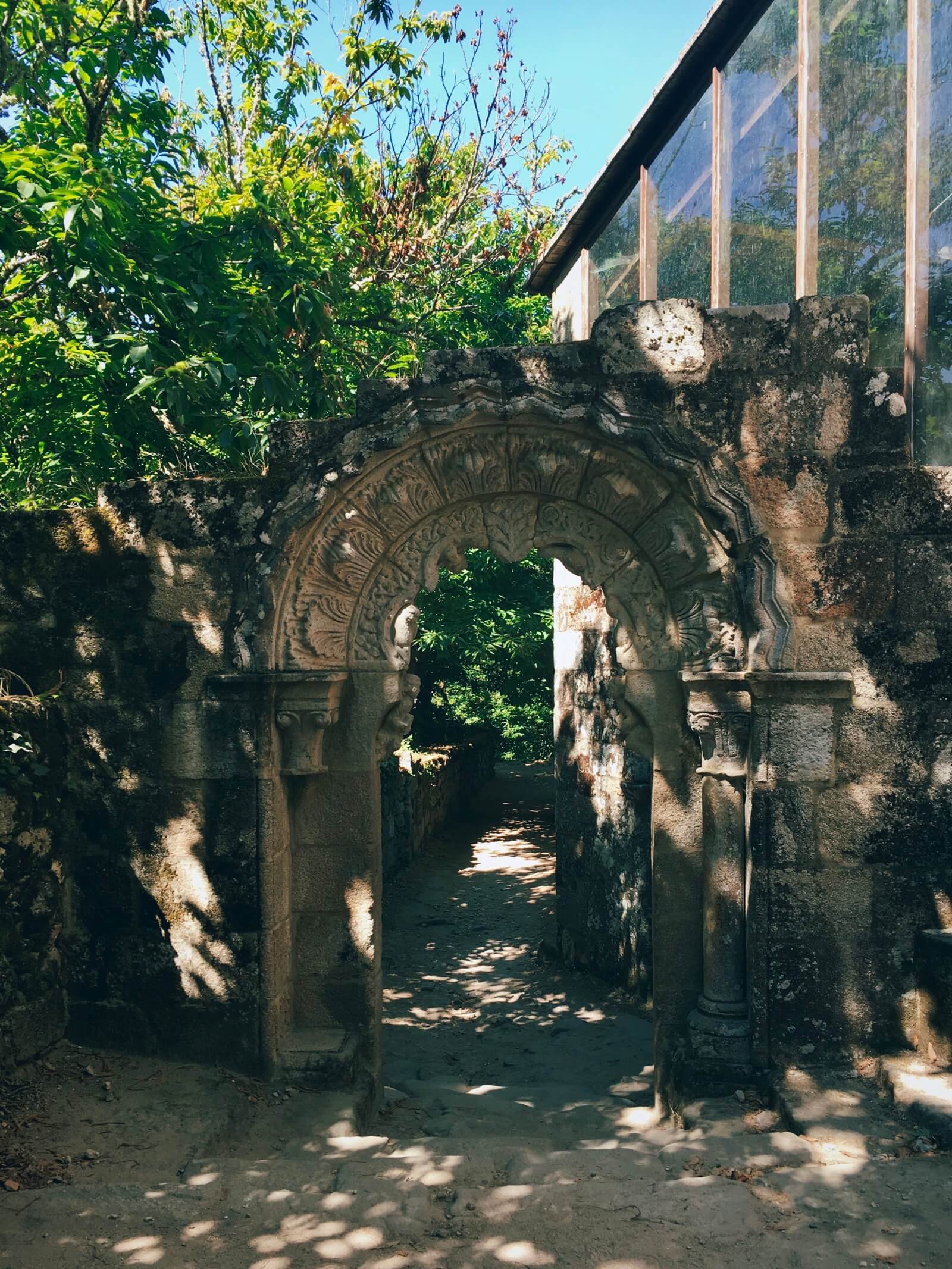
I’ve had the pleasure to a twice; once the first time I came to Spain and the second in January; camped near Parada de Sil under a meteor-showered night sky, hiked to the hidden Mosteiro de Santa Cristina de Ribas de Sil, entered the castle of Castro Caldelas, passed through Monforte de Lemos, the unofficial capital of the region on a very cold day.
My partner and I rent a house now. It’s difficult to find rentals in Galicia outside the major cities; everyone is selling. We’ve looked at a few places to buy. While both of us have that nostalgia of traveling, living in West Africa, being free and untethered, it runs against our longing for land of our own to care for and the acknowledgement that the earth cannot sustain that lifestyle on a grand scale.

Since moving here, we’ve vacillated on the question of proximity if we were to ever purchase something; how close to a town (and ease of socializing) or how far? We have friends in Allariz now and we were looking forward to the weather turning better so we could gather outside. But we also want space to garden, and the available options with an adjacent plot of land and within walking distance are slim or unaffordable.

But now, we don’t go to town anymore, save for a weekly trip to the market. And this will ease up. Of course at some point the current situation will end, but with what consequences? What will be new forms of normal? Will I so carelessly dar dos besos to friends of friends when I meet them? Can we anticipate another autumnal virus outbreak?

Which is why I think of the Sacred Riverbank. A refuge, still populated, but less so. And perhaps this future was written for us over there; quietly cultivating a small garden, telecommuting, with an occasional bike trip to town for groceries. It’s good enough for me.
Day 19: Lifted, A Bit

I’m sleeping more lightly than usual. It could be Spain entering daylight savings time but it started a bit before this. At least I’m getting some sleep. I think others are struggling. I don’t have much to write about here. I’m trying to write for my fiction project more.

  • I took Alqo out to the monte early along with Moment’s wide 18mm lens. I love using it but I’m itching for new landscapes. It might be awhile before that happens.
  • It snowed today. I went down to the “gym” (my house’s bottom level, not really a basement but an unconnected open space with a concrete floor and a yoga mat) and finished in time to see it. Lasted about an 45 minutes or so.
  • Half of my book order came. The second batch has physical copies of Capital and The Three Body Problem which I’ve already started digitally, along with some other great stuff, all quite long. Working all day on a screen all day, my eyes get tired quickly. Started Kropotkin this morning and it was so enjoyable to hold a book and highlight. Today I received:
    • Peter Kropotkin’s The Conquest of Bread
    • Larry McMurtry’s Lonesome Dove
    • Brandon Sanderson’s Oathbringer
  • Reading Esmé L.K. Patridge’s Medium essay How to Cope with Self-Isolation, According to a 9th Century Islamic Philosopher.
  • Speaking of, Early Islam historian Ian David Morris is giving a free seminar on Twitch. I’m pretty excited about this. If you’re interested, do the reading first. It’s short.
  • Listening to This Is Scientist on Spotify (Similar playlist on Apple Music)

Day 14: the Shape of Things To Come

Can I scream?
We lack the motion to move to a new beat!
How can we expect anyone to listen if we are using the same old voice?
We dance to all the wrong songs
We enjoy all the wrong moves
— Refused: New Noise

As the dead pile up and the living struggle to meet ends meet around the world, I resign myself to this reality and try to focus on the here and now in our small, safe-for-now village. But my head spins as we are thrown into the peak of the coronavirus crisis while the dual shadows of a decaying and depraved globalized economy and climate breakdown lurk beyond.

I try to stay calm and present with the myriad micro-joys: the kitchen table where I (gratefully) work and write; the small patch of grass where Alqo sunbathes in the early spring mornings; the short walk up the carretera secundaria that exposes a footpath to wander the monte without being noticed by passing guardia civil patrols; a reluctant Amazon order of eight books of fiction and theory to allow myself a break from screens and the news cycle; a beautiful and simple daily routine of meditation, fitness, work, creativity, and delirious vegetarian gastronomy; the mobile panadería that feels even more essential and convenient to avoid the town.

The macro-agonies that I cannot outrun: immediate family members in a densely populated state that must continue to work; the ineptitude of the ruling class to help working people; an American stimulus that will barely cover a month’s rent and nothing else while leaving the many with either nothing at all or delayed disbursement; the prioritization and love of money that will prioritize illogical, fossil-fuel guzzling industries; the awareness that this is an overture and we will surely have another crisis within the next decade.

I’m not living up to the aspiration of stumbling toward hope. I can’t even stumble. It’s of my own doing. Talking to a few friends who are less tuned-in, maybe I could avoid things better, log off, dive into working on writing those novellas more, care less. Human brains aren’t equipped to soak up so much negativity with so little power to change or dismantle those culpable.

En fin. Unfortunately for me and possibly many others, the macro is consuming the micro. And this is just the beginning

Staying Inside: Solidarity from Solitude

“All of humanity’s problems stem from man’s inability to sit quietly in a room alone“ — Blaise Pascal

Day X of lockdown, quarantine, self-isolation, etc. Any word I use is lacking. The Spanish government has extended the confinement period until 12 April, past Semana Santa. I knew this was coming. Frankly, I think it’ll extend past this. The epicenters of the coronavirus crisis in Spain are brutal and the numbers of positive cases (to say nothing of unconfirmed cases or people thinking they have symptoms but cannot receive a test) are rising. Doctors are in tears on social networks lamenting the difficult decisions to pull elderly patients off respirators to give them to younger patients and begging us to stay inside to flatten the curve and stop the spread.

Outside of the Spain and other affected countries like Italy, I see the rumblings of the governments of the United Kingdom and the Unitedl States; simultaneously lying to the population about its preparedness, how deadly this can be, and prioritizing their economies over human lives. It breaks me a little bit. It breaks me, someone far away and relatively safe, because people look for leadership in times of crises. And those leaders are already diluting their advice to stay inside by suggesting we might need to stop that for the sake of the economy. I’ll say it a thousand times more and I’ll say it everyday. The capitalist class does not give a fuck about you.

People of the Occident have become so alienated and atomized from their fellows that to ask us to stay inside, to practice social distancing, to think of the more vulnerable in our society is beyond many.

Twitter isn’t a good measuring stick, but I see people being reckless about our current situation. They say we’re hyperventilating, they try to compare numbers of other illnesses and their mortality rates to for some good ol’ whataboutism, etc. How about we listen to doctors and nurses instead of people who received an email from their cousin who lives in his parents’ basement and crunched some numbers one night?

Look, there are many people who cannot stay inside; the unhoused, service sector workers, medical staff. I get that. But for the rest. The ones who can work from home, self-isolate. By all means, go for a walk alone, but don’t half-ass this. You could be responsible for saving lives just by being at home.

Have some solidarity. If we do this right, we could avoid much harm. Then we can start reorganizing this society to be more coherent and human-centered.

Belief and Dogma in These Times

An small anecdote. An eminent conservative traditionalist scholar of Islam from a certain country tweeted about their country’s mosques re: the coronavirus pandemic. In it, he stated that those coming to prayer must have gloves, a rug of their own, must not shake hands, and that it is not necessary to line up shoulder-to-shoulder. I glanced down and saw a reply:

May Allah reward you well…would you kindly provide evidence that “the worshipers do not have to line up and do not converge” in this case?

In this new era, where everyone will have to adapt in order to protect each other, someone is asking for evidence. Is there a precedent, I imagine a hadith, that is attributed to the Prophet Muhammad that confirms this change in the prayer in extraordinary circumstances?

Here is an example, one but not unique, of the line of thinking that leads to dogmatic (and perhaps fatalistic) religious worldviews that secular people rightly cannot understand. I’m sure this person was being sincere, so maybe I’m making a mountain out of a mole hill. And I do not mean to paint with such a broad brush, but it is a sample of the conversations and experiences I’ve also experience in Muslim communities. I see this and worry a bit. Do we need evidence to keep our distance in practicing our faith without the worry or threat of contagion, endangering not just the men standing next to you but their families and anyone they come into contact with as well?

Belief doesn’t need to rely on looking back to old world thinking or an over-reliance on others. For me (because I always only speak for myself) it is an opening up to possibilities beyond the material and should aid in our progress towards an appropriate mission, caring for the material and spiritual needs of all creation. It brings confirmation that the human journey is much longer and deeper than what we experience it, not as some deviation from a more pious past.

Another anecdote. A different scholar, American, but no less traditionalist, tweeted regarding mosque closures in other countries. This is in response to someone sharing a link about why UK mosques have remained open:

In other times, it’s an amusement at best or a nuisance at worst to see ill-trained students from madrasahs try to flex their literalist muscles against critical thinking and common sense. Right now, this attitude will inevitably cause deaths and cannot be tolerated. Avoid socializing!

More rational, yet quite a few pushed back on and felt scholars and their institutions were being attacked.

This is why I have chosen to ‘self-quarantine’ myself from orthodoxy. This is why I have to look more closely and critically into the history, the power relations, the primary and spurious secondary sources of my adopted belief system much more than following personalities, also swayed by their education, yes, but by their own histories, reactions, and opinions to the times.

And this is what belief brings me. It brings me some sense of serenity (some, I say) to prepare for the oncoming of what the troika of crises (coronavirus, climate, capitalism) will bring about. It is spiritually lonely, I admit. But it squares with my reality much more than arguing about mosque closures. Talk to some Muslim women who have been boxed out of the mosque explicitly or otherwise for their entire lives and pray at home.

The Qur’an, the starting point and end point of Islam, is dynamic, filled with signs and admonitions to reflect upon. But it will only remain so in the hearts of dynamic, open-minded individuals who choose to prioritize it over the whims and opinions, however educated, of other humans. The times are strange and filled with uncertainty and disinformation.