Postponed Field Trip and A Gathering of Produce

We’re getting ready to go on a mini road trip for a couple days. Knowing that Galicia didn’t organize any general strike yesterday (20 September) in solidarity with students, our plan was to leave yesterday to make it back in time for next Friday, where climate-conscious pontevedreses will gather in Praza de Ferrería. But with news of a storm coming, we decided to wait it out and leave after the weekend.

Usually our road trips have entailed long distances; California to Oklahoma and back, a loop around Andalusia, Madrid to Germany through the French and Belgian countryside. Now, our priorities are changing and we want to stay closer to home and go slower. Plus, we have a few things to do:

  • There are a couple fincas for rent we want to check out near A Estrada, Silleda, Lalín, and Chantada. These towns are more or less in the center of Galicia, with most of the provincial capitals an hour or so away by car.
  • Patricia and I have a friend near Sarria that we would like to visit again. He lives in a small village in Lugo, right on the camino francés arm of the Camino de Santiago.
  • And we will finally visit Sende on the return to O Grove. I found Sende online a couple years ago. It is one of the first rural coworking and coliving sites in the world in a small Galician village of 20 people. When I think about rural revitalization possibilities, Sende is like a guiding star.

So yesterday, instead of packing and leaving, we visited a neighbor’s finca. He is getting old and isn’t able to walk the fifteen minutes down the road to collect the the myriad fruits like figs, pears, apples, lemons, chestnuts, and some cabbage.
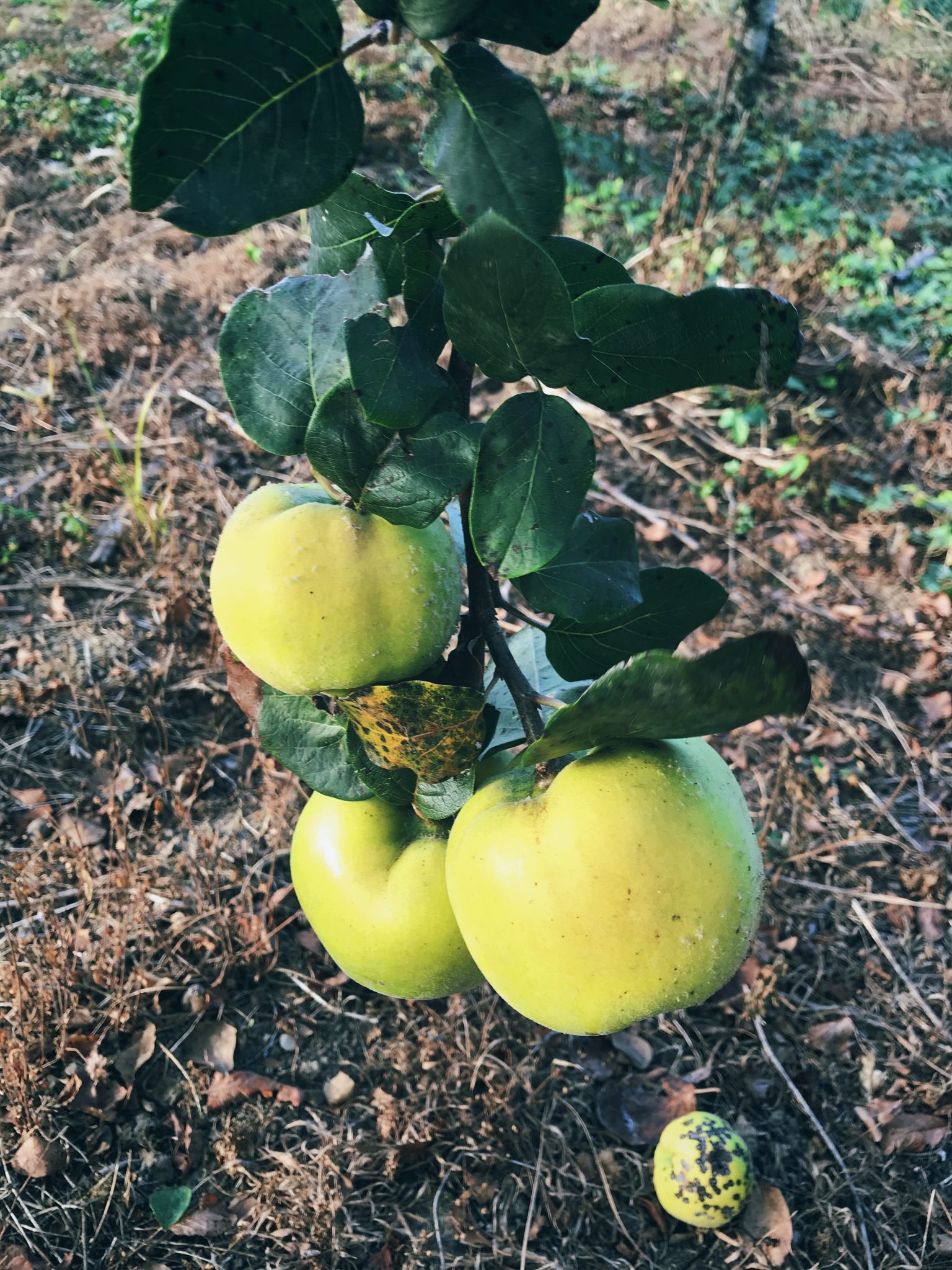
Even without so much human care, this finca is productive. Since arriving to Galicia, Patricia and I have spent very little in supermarkets. The sense of charging amongst people here is incredible, a totally different feeling then in Cologne or Villanueva. Often some neighbor or family friend gives us enormous, bright red tomatoes or a bundle of eggplants.

I cannot wait for castaña season and magosto, when the chestnuts encased in their spiny capsules fall to the ground, ready to be roasted on a fire. I had never tried roasted chestnuts before Spain.

Even though we gathered quite a bit of the produce, there were many apples that had already ripened, fallen, and spoiled. Surrounded by plants and trees makes us giddy. This woman was humming My Favorite Things all the way home.
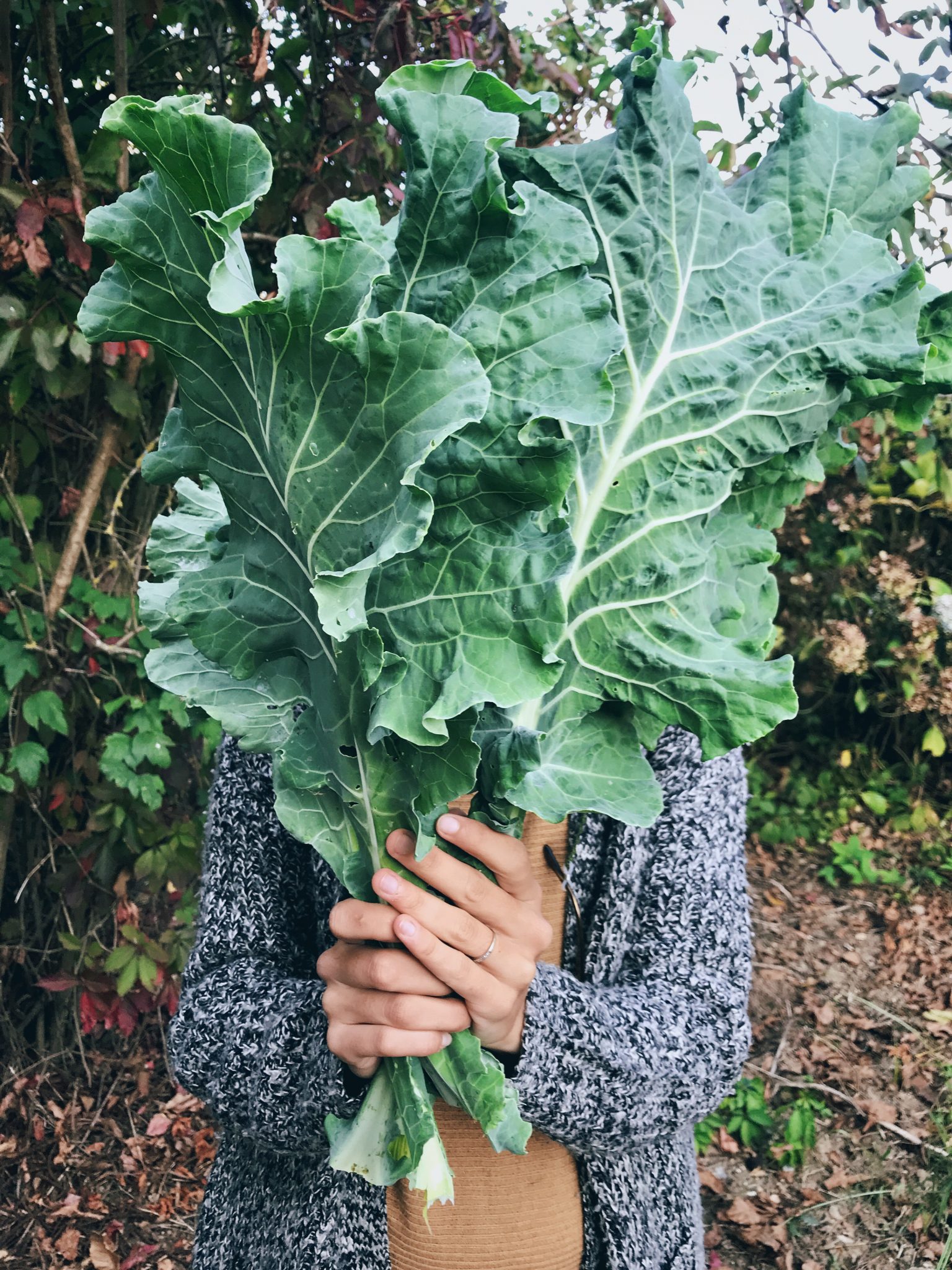
This slower life out in the open air suits us better. When the time comes, we’ll have our own garden. But for now, we can enjoy the fruits of another’s labor (with their permission, of course).

Galician Culture and History on WordPress with Tim Ginty

I’m drawn to places very easily. It could be the way I feel while there, or something read or imagined about the history or contemporary culture of the place. I start daydreaming about what life would’ve been like in the recent or distant past and what it might look like years from now.

What has changed recently is my desire to understand these places through the perspective of others rather than facts and dates. And so, I’m interested in reading more about my new home of Galicia much more than what’s happening in U.S. politics for example.

Other than Wikipedia and information about walking the Camino de Santiago, I don’t see much blogging on Galicia in English. While I can read castellano, it does not come as easy yet, and I struggle with written conjugated verb forms and less-frequently used vocabulary, slowing down my progress.

So I was delighted to stumble onto Tim Ginty’s blog Lives and Times this morning. He has a few posts about Galicia from last year:

  • Unearthing Gallaecia: The Ruins of Monte O Facho for an overview of castro culture, their subsequent romanization by the Roman legions, the unique syncretism of the society it produced, as well as photos of O Facho. “Even today, in Galicia there still exist signs of this fusion of Latin and Pagan, hints of a latent indigenous culture found in their Carnivals and Solstice celebrations, and in their mythology of mouras (siren-like women of the forest) and stories of meigas (witches).”
  • A Conversation with César Lema: On a Rural Return for a window into Lema’s worldview on communalism in rural Galicia and within the long-arc of history, the possibility of utopias. “Modernity, in contrast, offers an atomised community and alienated production, living beside people you might not even know and working to generate a profit you will never possess – that is, the absolute contrary of the shared life.”
  • The Eternal Wall of Lucus Augusti for a look at the fortified wall of Lugo and the building of of them symbolizing power and splendor but also insularity. “Only a few decades after the construction of the wall Lucus Augusti would fall. Its formerly all-powerful rulers – a slave-holding class of indolent elites – would wave the white flag to the invading Suave tribe from the north. The Germanic barbarians did not even need to lay siege upon the fortified city, and some say that the elite of the city were celebrating a feast when the occupiers came, too drunk on sweet wine to organise a resistance.”

I’m inspired by Tim’s writing. The posts on Galicia are just a small sample of what he has. He also wrote about Marinaleda, the communist pueblo in Andalusia. He effortlessly blends history with personal essay and photos, which makes for interesting reading.

I feel allergic to blogs that try to push or sell something; an ebook, a course, ads, more posts, etc. Blogs give everyday people a platform and a space to flesh out ideas, share something with the world, valorize practices and ideas. As I go on with Among the Stones, I hope it can also be a place to share like Lives and Times.

Nunca Máis: A Tribute to the Prestige Cleanup Volunteers in San Vicente do Mar

As we walked down down to the beach and chiringuito where a band was playing, I noticed a statue situated next to a small boardwalk near the water. Not wearing my glasses, I couldn’t make out any of the features of the figures. They looked too smooth, like the wind, rain, and surf had eroded them away. But as I came closer, I realized the figures were wearing jumpsuits and masks. Of course, the Prestige.

The Prestige oil spill in November 2002 was the worst ecological disaster in Spain and Portugal. I wasn’t aware of it at the time, probably because I was 16 and mostly thinking about video games and who’s on AOL. During a storm off the Costa da Morte, one of the Prestige’s tanks burst and started leaking oil. Fearful of environmental damage to their respective sovereign waters and fishing industry, France, Portugal, and Spain all denied the Prestige port of entry. A few days later, it eventually split in half and sank, purging a total of 17.8 million gallons of oil, more voluminous and more toxic than the Exxon Valdez incident.

The damage for spill was catastrophic for Galicia, with oil covering 1,300 kilometers of coastline. The Xunta suspended fishing for six months. Along with the company TRAGSA, thousands of everyday Galician volunteers donned white jumpsuits to clean up their beaches. Looking at photos of the cleanup is intense, as many wildlife suffered and died because of this single-hull tanker and our insatiable appetite for oil and globalized development. Not only was there environmental and economic damage, but human damage as well.

From Scientific American:

The damage could, however, run deeper than skin irritation and breathing difficulties. A study of clean-up workers from the 2002 Prestige oil tanker spill off the coasts of France and Spain found increased levels of DNA damage. The greatest damage, the researchers found, was found in workers who had not worn protective masks, though elevated levels of damage seemed to dissipate over time.

A year later, the cleanup operation was designated as a success. Galicia now has more Blue Flag beaches than before the spill. This statue is a tribute to those people.

Nunca Máis means never again. Never again should we, the people and the appointed vicegerents of planet Earth, allow business interests to pollute our waters, jeopardize our health and livelihoods, and run roughshod over the resplendent natural world. Meeting this statue and being reminded of the Prestige oil spill was a reminder of this. Patricia and I are currently watching Awake: A Dream from Standing Rock and I’m struck by the wanton carelessness and organized violence of DAPL security forces against peaceful people of prayer who want to protect the water for future generations.

We are guests on this planet. We must remember this everyday. To me, this means momentarily getting out of our bubbles, our social micro-dramas, and our digital lives, that prevent us from seeing the forest for the trees.

Preference for Landscapes

When I scroll through my favorited photos on my phone, I realize how many of them are landscapes. Even though they never fully catch the grandeur or the subtlety of why I took the photo in the first place, they are a reminder of where I’ve been and what I’ve seen.

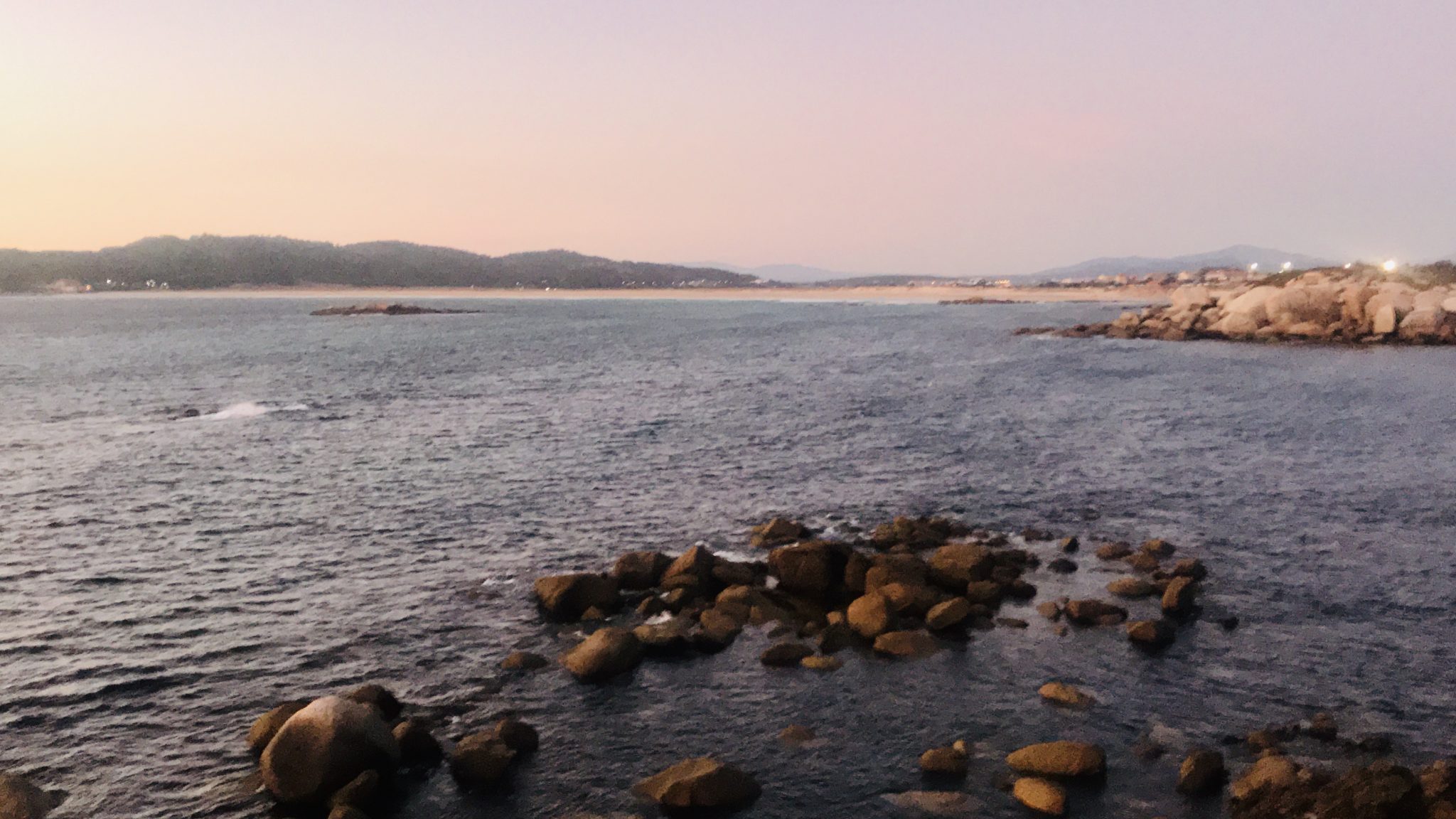
This one is of the water near A Lanzada just after sunset, which is spectacular here. Many families walk to the isthmus where the chapel sits for a great view around 8:30 in the evening. The photo shows the lengthy Lanzada beach with a few buildings from San Vicente do Mar off in the distance.

On this day, we actually missed the sunset. Patricia was taking photos of her jewelry and Alqo was excited to be out and about. No matter. Sunsets aren’t the only beautiful thing to remember.

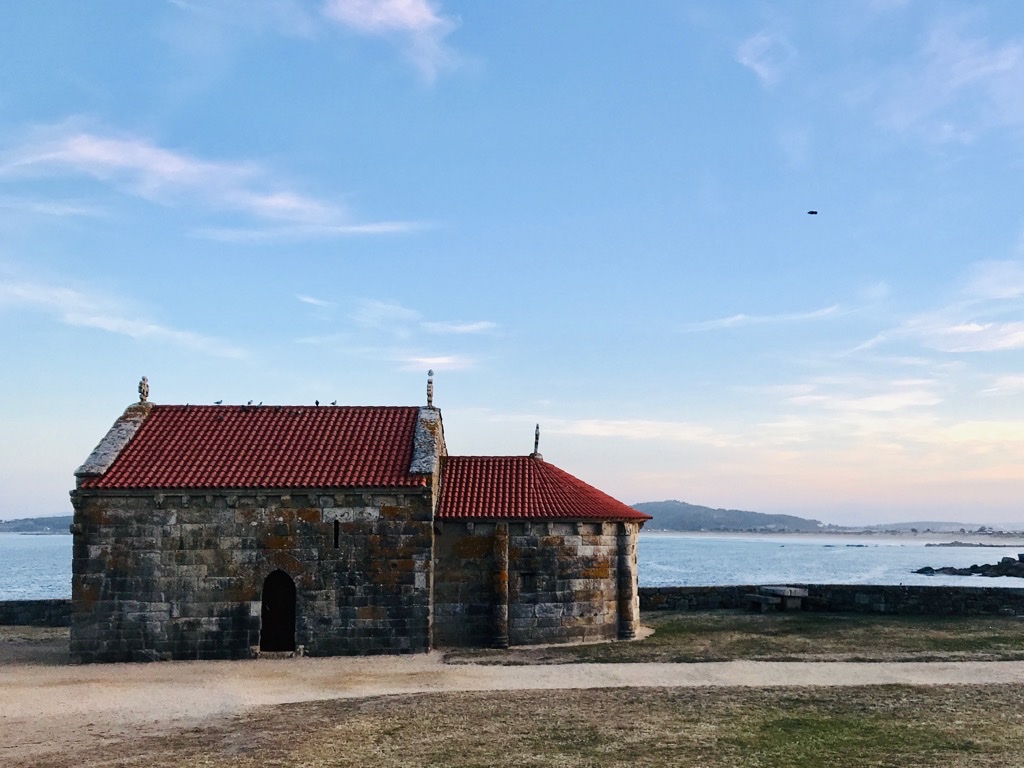
Ermida da Nosa Señora da Lanzada

Most mornings I take Alqo out for a walk before breakfast. In the last week, our walk has become significantly more beautiful, swapping a brisk walk in urban Südstadt to the meadows of Villanueva and now the sea and its jagged, irregular rocky coastline. A few hundred meters away from our place is a small isthmus. The wind has been strong since we arrived to Sanxenxo, so we’d only make it halfway out, to an small meadow where RVs and campers park at night to enjoy the sunsets. But this morning the wind was calm. On this tiny isthmus sits a chapel, the ruins of an old tower, and a pre-Roman settlement.

The Romanesque chapel of Our Lady of Lanzada is a simple affair in juxtaposition with its surroundings. It was built in the 12-century from the ruins of another older chapel, possibly from the time of the tower. Like many older Christian sites, the chapel sits next to something very un-Christian, as if to ward away the pagan gods and worshippers with the Cross.

A castro, a Bronze Age pre-Roman fortified settlement with some remainder of the state walls still visible and preserved, was here long before. And like so many others places, the old rituals mixed with the new and at least tolerable to the Church.

There is a fertility ritual in August on A Lanzada beach called the Bath of the Nine Waves, where women come to the beach to bathe, then sweep the chapel as an offering to the Virgin of Lanzada to cure their infertility.

History is everywhere, if we only find the time to look. Sometimes, the past doesn’t leave artifacts or sites to be toured and admired, only remaining in the legends or historical writings of strangers who came before, closer to the source of time and the people who gave them meaning. But Spain has it all. I think that is why the country is so striking for guiris, there are so many layers of history that fold over each other and onto the present.