The Age of Extinction

It’s 2018. We’ve seen enough extreme weather in just the last few years. But fundamentally changing the way our economy and society works to facilitate, you know, staying alive isn’t politically convenient. President Trump doesn’t believe the National Climate Assessment, which was released on Black Friday:

DAWSEY: You said yesterday when you were leaving that you were skeptical of a climate change report that the government had done. Can you just explain why you’re skeptical of that report?

TRUMP: One of the problems that a lot of people like myself — we have very high levels of intelligence, but we’re not necessarily such believers. You look at our air and our water, and it’s right now at a record clean. But when you look at China and you look at parts of Asia and when you look at South America, and when you look at many other places in this world, including Russia, including — just many other places — the air is incredibly dirty. And when you’re talking about an atmosphere, oceans are very small. And it blows over and it sails over. I mean, we take thousands of tons of garbage off our beaches all the time that comes over from Asia. It just flows right down the Pacific, it flows, and we say where does this come from. And it takes many people to start off with.

Read that again. Oceans are small? Our air and water at a clean record? Almost 63 million people voted for this kind of nonsense.

Trump’s spokeswoman Sarah Sanders and Secretary of the Interior Ryan Zinke both said the report was a “worst-case scenario”. One of the authors of the report responded on Twitter. Apparently, sixteen hundred pages of hard science need to be reduced to tweetstorms.

We will not wake up from his nightmare. It is here. Our grandchildren will be dealing with this. We can only keep talking about this. This is an Independence Day-level event, the one where we all need to work together to save the planet. Instead of aliens, it’s the pesky side effects of our globalization.

There are two movements I’ve seen in the US and U.K., The Sunrise Movement and Extinction Rebellion. We need to disrupt the status quo.
Tongva Land

Last year for the holiday, Aruna D’Souza asked Twitter:

“Whose land are you feasting on this Thanksgiving?”

Using Native Land, a map project by Victor Temprano, we can discover more about the history of the Americas and Australia. I recall California’s 3rd grade curriculum which focused on Spanish mission history, but not the Tongva, the original inhabitants of the Los Angeles Basin and the Southern Channel Islands, or any other indigenous group living in what is now California.

The Tongva people have lived there for 7,000 years. Their history seems well-documented with 2,800 archeological sites, California and U.S. Federal records, and Catholic mission documents. Reading history gives us perspective, along with many other benefits.  Tongva history is rich with personalities and stories, like Toypurina, the medicine woman known for organizing a rebellion against the San Gabriel mission.

Spanish-American colonial history is dark. It’s probably obvious, even without reading into specifics, what happened when missionaries and settlers came in; they enslaved Tongva people, committed state-sponsored genocide, and allowed the theft and slavery of Indian children in the name of religion and civilization. It actually took the State of California until 1994 to recognize the Tongva in Assembly Joint Resolution 96.

We (non-Tongva) are the immigrants. We can’t rewrite history, but we can help stop Native erasure. We can celebrate today with family and friends and educate ourselves and others.  Perceptions are changing with each generation. Becoming more sensitive and aware of our history can help us into the uncertain future.

Happy Thanksgiving.

Dame Una Palabra

En la tierra
de los mil poetas
escogí perderme,
acabe encontrándote.

La tinta auguró nuestra historia
las dunas de tornaron olas,
cordilleras en tu espalda
e infinitud de estrellas.

Sigo a tu lado,
me enseñaste a ver el mismo cielo
aún estando preso,
perdido en mitad de la ciudad
y el horizonte tornado de deseo.

En la tierra de los míl poetas
nos descubrimos infinitos,
libres de sed,
huérfanos de nubes,
ahijados del oasis
y del futuro.

Esta ciudad, es a veces,
un desierto más profundo
que el corazón,
suerte que llevo las alforjas
y en el puño, la ilusión
de que ya nada es finito.

Pablo Urizal, Madrid

Leaving Mauritania

This morning I’m leaving Mauritania. While I will certainly miss my friends, colleagues, students, and hangout spots, it’s time to go. I came here on a temporary substitute teaching contract in February 2013, thinking I would only stay a few months. It’s been a time of great opportunity, learning, and change. Now, four years later, I’m moving on to other places and things.

After I finished my U.S. Peace Corps service in Sierra Leone, I came home to California with a modest readjustment allowance but without any idea of what to do next. I was convinced teaching wasn’t for me. I decided I would determine my effectiveness as a Peace Corps Volunteer by being a good community member rather than a Language Arts teacher. In that, I feel I succeeded.

I made great Sierra Leonean and American friends, learned to speak Krio and some Loko, spent the majority of my time outdoors, ate delicious food, and learned more about myself and others.

I came home relieved to see my family and friends after so long and ready to settle into the lifestyle I had left. When a few weeks of not working turned into a few months, I started getting nervous. Was I unemployable? How will I pay rent in the outrageous housing market of Southern California? But I wasn’t acknowledging my years teaching in West Africa as professional assets. An acquaintance of my dad’s encouraged me to try teaching overseas again.

I started my search at an international school in Freetown, Sierra Leone. I had met the director before leaving and we got along. The thing that kept me from accepting a job at that time was I would only have around two weeks back in the United States. She had already filled the positions for the current year but forwarded my email address to another international school director in Nouakchott. After a few email exchanges and three weeks, I was on a plane, heading to a country I knew little about, ready to teach first grade.

A lot has happened in the years since—too much to adequately chronicle. I’m pretty lackadaisical about writing publicly, but I’m trying to gain confidence about that.

These last four years. I;

  • enjoyed teaching first grade for three years and IT/ESL this year
  • contracted malaria on a return trip to Sierra Leone and was hospitalized back home in California
  • played with the Baseball/Softball Fédération de Mauritanie
  • started practicing Islam, something I’ve been interested in doing since university
  • visited the the Adrar region of Mauritania three times[^3]
  • contracted dengue fever
  • watched way too much Netflix
  • learned to drive a manual transmission
  • vacationed in Turkey, Morocco twice, Islas Canarias, Senegal thrice, and Spain
  • met, fell in love, and married my favorite person in the world
  • saved enough money to backpack around for at least a year with that person

Before every vacation away from school and Nouakchott, I would be dying to get out for awhile, eager to escape the monotony, heat, or constant deadlines of work.

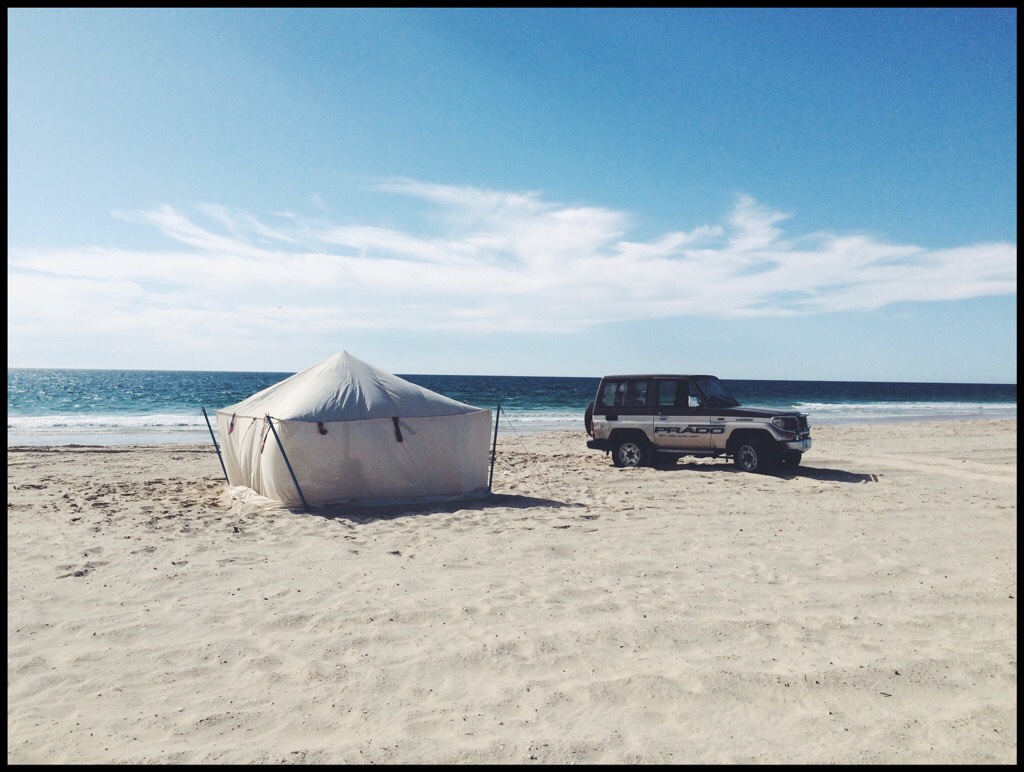
But every time I’d spend more than two weeks away, a longing came to me for the pace of life here, the unhurriedness of Mauritanians, the nights at cafés chatting about everything, heading out into the desert for a night camping, eating tiéboudienne on Fridays after school, and being comfortable at home.

There are things that will always prevent me from calling Mauritania my permanent home. But this post isn’t the place for that. And maybe I won’t write ever write that. Because even though I’m more than ready to board the plane and say goodbye, I know it won’t be gone too long. I know Mauritania will pull me back, at least for a visit.