Day One: Oropesa

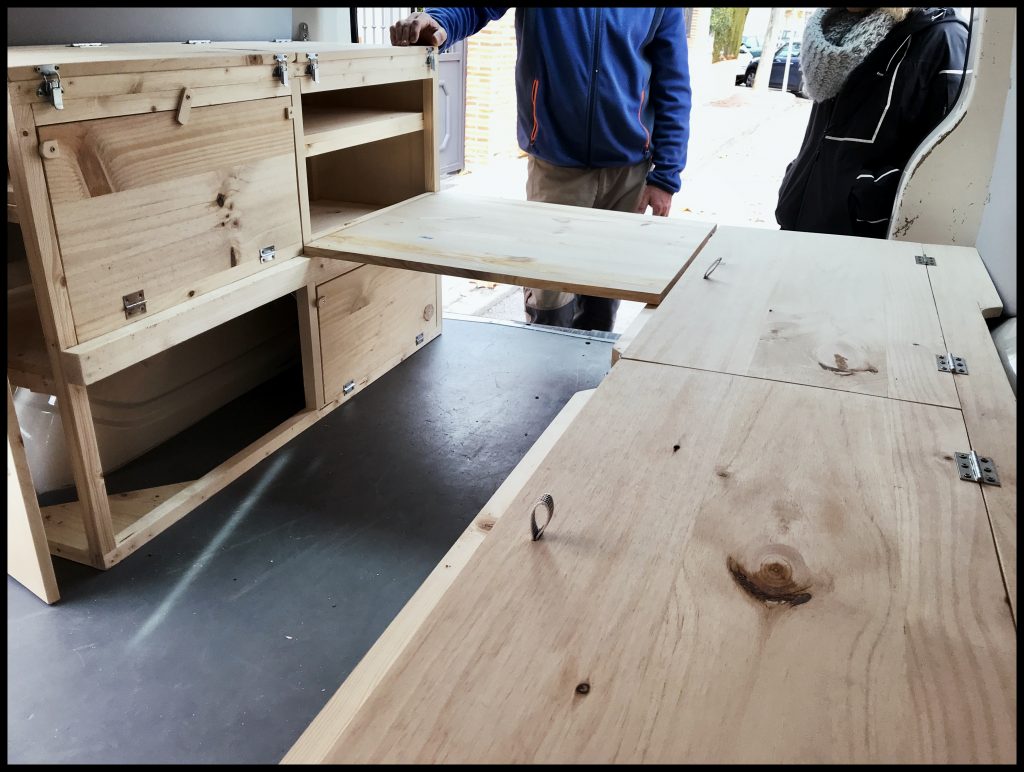
Today, it started. I’m enamored with the potential to explore anywhere we want to go without needing to find a dog-friendly budget hostel with a kitchen once we arrive. There is a little setup make the bed inside, but it beats setting up a tent and air mattress by a country mile.

We got off to a late start. Itching to start traveling with Holly but not ready to head to Cologne and confront a proper German winter, we decided to head south in search of some sun, Islamic history, and good hiking trails. Our first big destination is Sevilla, the capital of Andalusia. But we’ll take our time, sin prisa.

About ninety minutes west of Villanueva de la Cañada, our home base for the last three months, stands a hilltop town named Oropesa with a castle built by the Moors over some Roman construction. Oropesa is small but reminded me of Trujillo and Toledo, two cities with similar architecture that pop up among the pleasant but somewhat monotonous countryside.

The weather was sunny and warm, unlike the last few days outside Madrid. We stopped to walk around the castle to stretch our legs and those of our dog companion. Not much happens on a Friday afternoon in any town in Spain so we quickly strolled the plaza and hit the road.

We read a Jacobin article aloud about meeting our needs and realizing our highest potential in a ecosocialist society:

We need to find ways to live luxuriously but also lightly, aesthetically rather than ascetically. Instead of an endless cycle of working and shopping, life in a low-carbon socialist future would be oriented around activities that make life beautiful and fulfilling but require less-intensive resource consumption: reading books, teaching, learning, making music, seeing shows, dancing, playing sports, going to the park, hiking, spending time with one another.

After, I thought about a few things:

  1. Latin America was a political, social, and spiritual catalyst. I want to write more about it, but leaving Mauritania was therapeutic in some way, though I hold it dear in my heart. It’s where I met my wife and took my shahāda. But we both needed time away from teaching obligations to think more deeply about the world and our place in it.
  2. I’m grateful to have a partner who is as curious and progressive about life as I am. Being able to encourage and build on each other’s ideas and projects is something special. Daily practices like reducing our plastic use, shopping and eating at local establishments to future plans on how to raise a kid in these times. Alhamdulillāh.

Crossing into Extremadura, we settled for the night near a merendero outside a small village surrounded by lightly-wooded pastures.

Arriving just before dusk, we made a simple salad while we listened to the cowbells and our dog tried to be brave and explore our campground unsupervised. The night sky perfect for stargazing with a hot chocolate.

Tomorrow we plan to visit Monfragüe National Park. The weekend and sunny forecast for tomorrow means we probably won’t be the only ones.

Galician Christmas

I have an a fascination with Galicia that probably borders on obsession. Historically Celtic, mostly green, rural, and wet in winter. Galicia reminds me of Oregon. People speak both Spanish and Galician. It’s also the destination for pilgrims walking the Camino de Santiago.

We decided to see some friends up north for for a change of scenery during Christmas week. We don’t celebrate Christmas other than getting together with family but often we are abroad and do our own thing. I’ve been to this comunidad autónoma two years ago and I was eager to get back. Here are some photos.

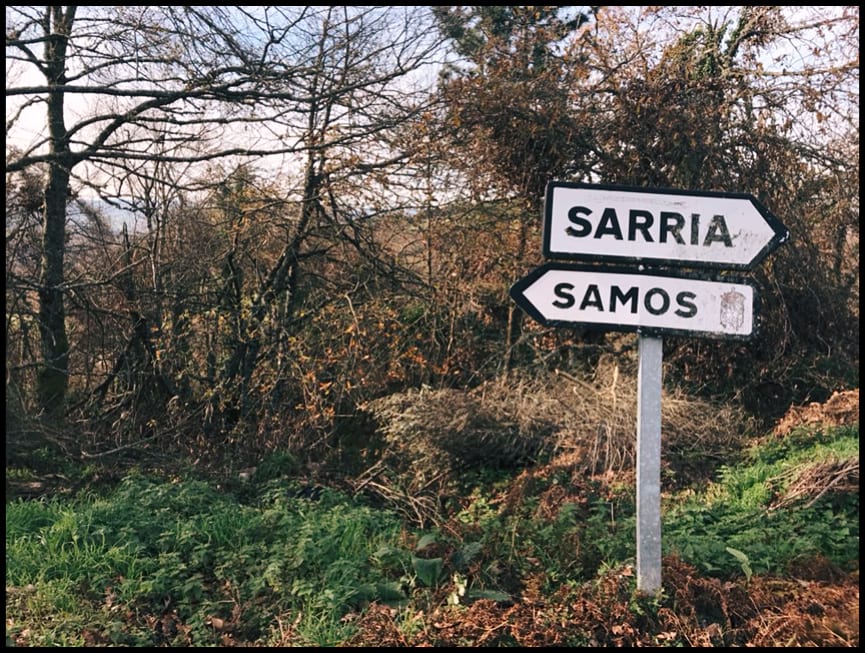
Our friend’s place is in a small town between Sarria and Samos. This time our GPS took us through the back way, which was amazing because we caught some glimpses of the Abbey of St. Julian.

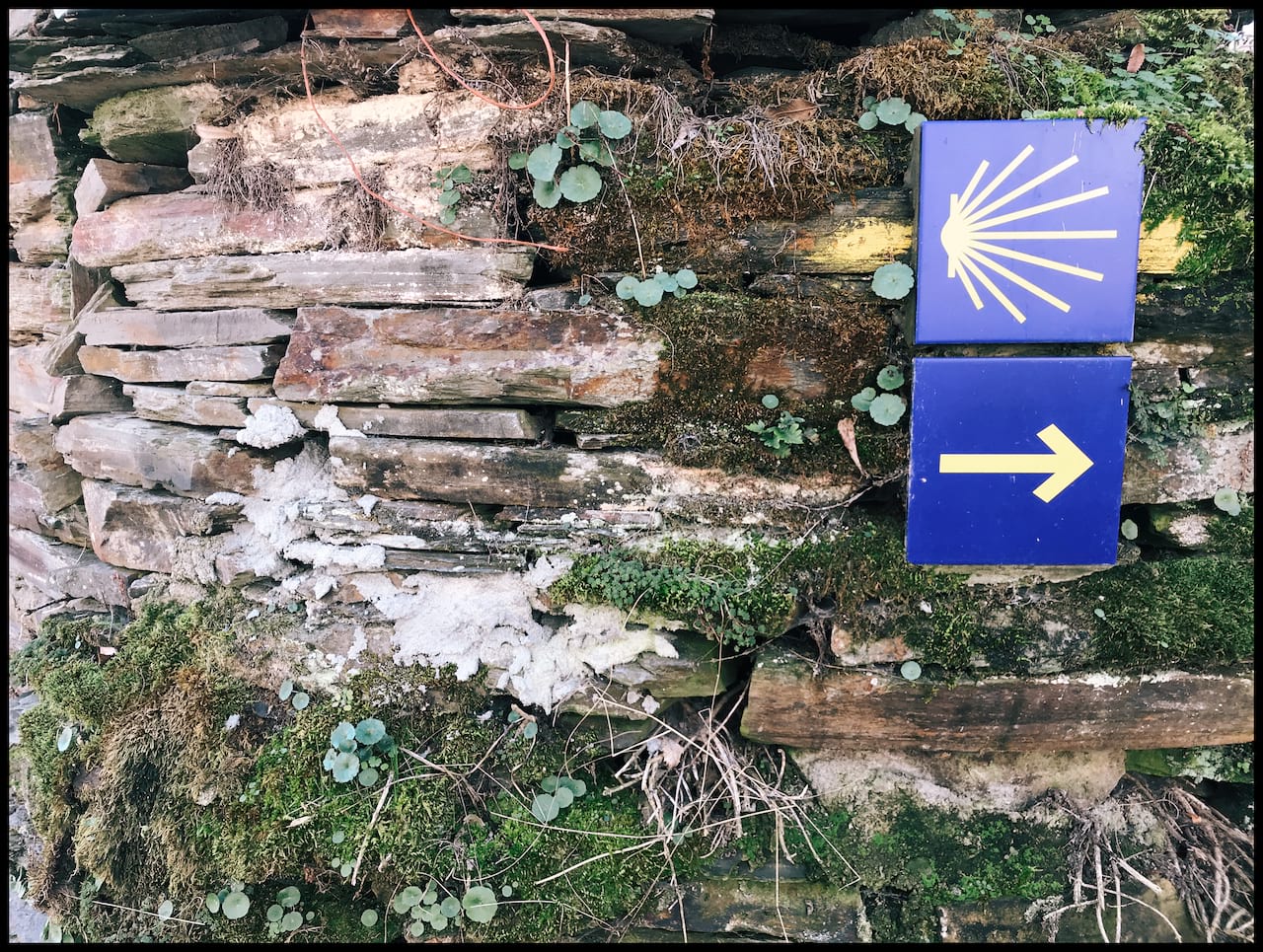
He has a farm right on the camino. The scallop shell symbol points the way for pilgrims.

We walked around to a few different pueblos on Christmas morning. They are hamlets, with only a few dozen people living in each. We also met this group of cows that followed us as far as they could in their pasture.

Galicia is amazing. For me, it might be a place I’d like to settle down in for some time. There is a lot of potential for some of the things we want to do; de-urbanize, be in nature, grow a portion of our food, and enjoy life.

Beto, Bernie, and 2020

Remember when we had a likable president? Those were the days, right? I voted for Obama, twice. And there were many things that the populace and media glossed over during his presidency. However, I never got the feeling the executive branch didn’t have a handle on things. Now, we have something else entirely. These last two years have been very strange.

Politics, right? Lots of people want to ignore it all. It’s exhausting. As we spent a few days in Galicia recently, the importance or pointlessness of politics came up in conversation. I vacillate between these points of view. Some days, I feel like ignoring it all, like many people do. If we paid less attention to these big egos who so desperately seek attention, wouldn’t things change?

Other days, I get a sense that the only real way to solve these big problems is through politics. It’s the twenty-first century and our industrialized society has left us with the responsibility of uniting to save our planet than at any other point of human history. I’m thinking an Independence Day scenario, where instead of aliens it’s CO2 emissions.

But if I internalize the second stance today, I need to throw my voice into the ether. Can we not elect another Barack Obama?

Branko Marcetic points out in his article for Jacobin about why Beto O’Rourke shouldn’t run for president:

If the Democratic Party ever wants to actually wield national power, instead of simply enacting change through easily repealable executive orders, then it has to win governorships, congressional seats, statehouses, and more all over the country.

We can’t just elect a young, telegenic American. There needs to be a reawakening to ideology and big ideas like a Green New Deal, Medicaid for All, and free tuition. Kate Aronoff’s article in the Intercept on what a Green New Deal would be like really encapsulates this vision.

So, Bernie? Honestly, I don’t know. He’s older, but there aren’t many potential Democratic candidates that are so single-mindedly focused on economic issues concerning the country.

The United States can sink or swim after the rampant corruption of the Trump presidency. Let’s get ourselves ready for the future.

Bai Bureh’s Photo

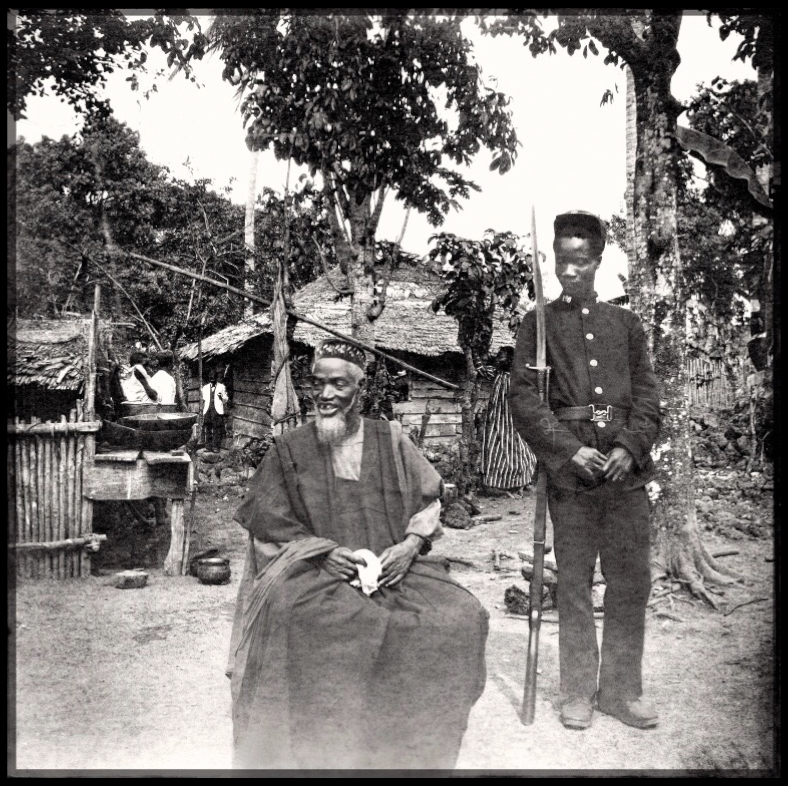
Inscription: “Bai Bureh, Chief of the Timini when a prisoner at Sierra Leone in 1898. An original photograph by Lieutenant Arthur Greer, West India Regiment who died August 7, 1900, when storming a blockade after the relief of Kumassie.”

Bai Bureh is recognized as the leader of a 1898 Temne rebellion against British colonial rule in northern Sierra Leone. His father was a Loko war-chief and in his youth, Bai Bureh was sent to Gbendembu to a training school for warriors. Throughout the 1860s and 70s he served under a Susu ruler but in 1886 was crowned ruler of Kasseh, near Port Loko. Needless to say, he was opposed to British indirect rule. When the protectorate was declared, the British immediately issued an arrest warrant.

From the Historical Dictionary of Sierra Leone:

After the British protectorate was declared over the Sierra Leone interior in 1896, a house tax was imposed, which many of the rulers and their people opposed, in addition to imposing the new laws the British were trying to implement. The British reaction was a forceful show of authority, including arresting, deposing, and brutalizing some of the local rulers. Bai Bureh was believed to be one of the rulers staunchly opposed to the tax and thus faced inevitable confrontation with the British who determined to make an example of him. This led to a major war of resistance in 1898 between the British and a Bai Bureh–led coalition that lasted for 10 months. Bai Bureh was defeated by the British-led forces, which had superior resources and armaments and had also destroyed the food supplies and large sections of territory. Bai Bureh surrendered, was arrested, and was exiled to the Gold Coast. He was brought back in 1905 and reinstated as ruler of Kasseh where he died in 1908.

Bai Bureh’s guerrilla tactics were very successful in the initial stages of the rebellion. Due to his reputation as an effective warrior was able to bring many fighters from all around Northern Sierra Leone to help him; Limba, Temne, Loko, and Susu.

This is the only known photograph of Bai Bureh. It was discovered by Returned Peace Corps Volunteer Gary Schulze, who found the photo on eBay. Before this discovery, there was only a pencil sketch of him from a British army officer.