The Millennial Left and the “Lesser Evil” of Joe Biden

A thing I saw after the the end of the Bernie campaign was this call online for the socialist left to throw down our ideological weapons and surrender to the inevitable Biden candidacy. “You have to vote for him! Otherwise, you are enabling fascism,” some said.

Asad Haider in Salon:

The scale of social change required to manage the impending age of catastrophe lies beyond the myopia of those who, since the election of George W. Bush (if not before that, in historical terms), have endlessly repeated that we have no option but to reduce our politics to the embrace of the “lesser evil.” To reprimand young people for failing to muster enthusiasm for voting for the lesser evil ultimately amounts to a refusal to recognize the necessity for a greater idea, for a mobilization for structural transformation. In our age of catastrophe, “lesser-evil-ism” is the most unethical position. The slogan of May ‘68, “Be realistic; demand the impossible!” remains a rational and ethical principle for the present. We should be inspired by the youth who are reviving it.

Haider rightly points out the absurdity of demanding allegiance from a few thousand socialists and preemptively blaming them for a possible loss, rather than building a political program that inspires millions of Americans who do not see the point in voting at all.

If Biden loses, it will not be because the Democratic Socialist of America didn’t endorse him, a request unbelievably laughable. It will be because, like in 2016, the Democratic Party decided to tack to the center, offer platitudes, and bank on white educated suburbanites and older loyalty voters of color. They will once again ignore the working class, the precarious millennials with Uber jobs and no chance of ever becoming homeowners ourselves.

To be transparent, I am still undecided about what I will do in November. California is solidly blue and we all know the popular vote is meaningless in our supposed democratic republic. I can hold my nose and vote for Biden, stay home, or vote third party.

The troika of crises that I squawk about; coronavirus, capitalism and the looming financial crisis, and climate change demand much more than going to the polls every four years for a false choice between evils. A re-configuration of society based on ecological, internationalist, and anticapitalist lines is the only way forward.

You say “it’s unnecessary”? Look around.
You say “it’s impossible”? Not with that attitude.
An Andalusian Pueblo Blanco Without Coronavirus

Instead of jumping on Twitter in the early mornings and inevitably seeing distressing reports of impunity and inequality, I’ve been reading La Voz de Galicia. It’s local news that relates more to my day-to-day, I practice reading Spanish and Galician, and there’s a plethora of human interest pieces that are pretty interesting. I pick out a few to read while I eat some breakfast to prepare for the day’s fasting. This pleasant article caught my attention today:

“Zahara de la Sierra, from medieval fortress to sanitary fortress”

The town of 1,500, a quarter of which over the age of 65, has not registered a single case of coronavirus. Considering that at the time of writing, Spain is the country with the second highest number of total cases and the fourth highest number of coronavirus-related fatalities, this is astonishing and awesome.

Zahara is a pueblo blanco, one of the whitewashed towns in the southern community of Andalusia with narrow streets and clustered houses. This one is perched on a mountain, with an old Moorish fort overlooking the town. I haven’t been there myself but I’ve been to other pueblos blancos like Grazalema and Ronda.

So how did Zahara de la Sierra manage to stay free from coronavirus, even as nearby towns and villages registered cases and fatalities?

First, they sprang into action the day after the state of alarm was announced and blocked off four of the five roads leading into the town. They sprayed every entering vehicle with water and bleach. The markets set up a delivery service. The women’s association cooked and delivered food to the footsteps of their elderly neighbors. They cleaned the streets a few times a week. They stayed in touch on Facebook. They outfitted music and lights onto cars to entertain children from the balconies. And they used the town’s contingency fund to help family-run businesses and autónomos, freelancers, stay afloat during the lockdown. They also turned away tourists, even though the pueblos blancos are very popular with international tourists and depend on the tourism sector.

This level of neighborhood support and seriousness to health should be envied everywhere.

First Brown Bear in the Central Ourensan Massif Since the Late 19th Century

Some good news in nature conservation. A brown bear between 3-5 years old came from A Serra do Courel in Lugo and probably spent the winter in Parque Natural do Invernadeiro, where it was caught on cameras set up for a documentary.

Patricia found this article in National Geographic España. There’s also a short English version at The Guardian.

We moved to Galicia in September, first on the coast near O Grove. We were preoccupied with finding work and a place to live so we weren’t in the adventurous spirit, other than a small road trip to find where we live now. Now that the quarantine deescalation and true spring have begun, I’m itching to get back to camping in the van, going on hikes, and exploring some of these places so close to us, like the central Ourensan Massif and of course, back to Ribeira Sacra. Hopefully we won’t disturb this guy when we’re there.

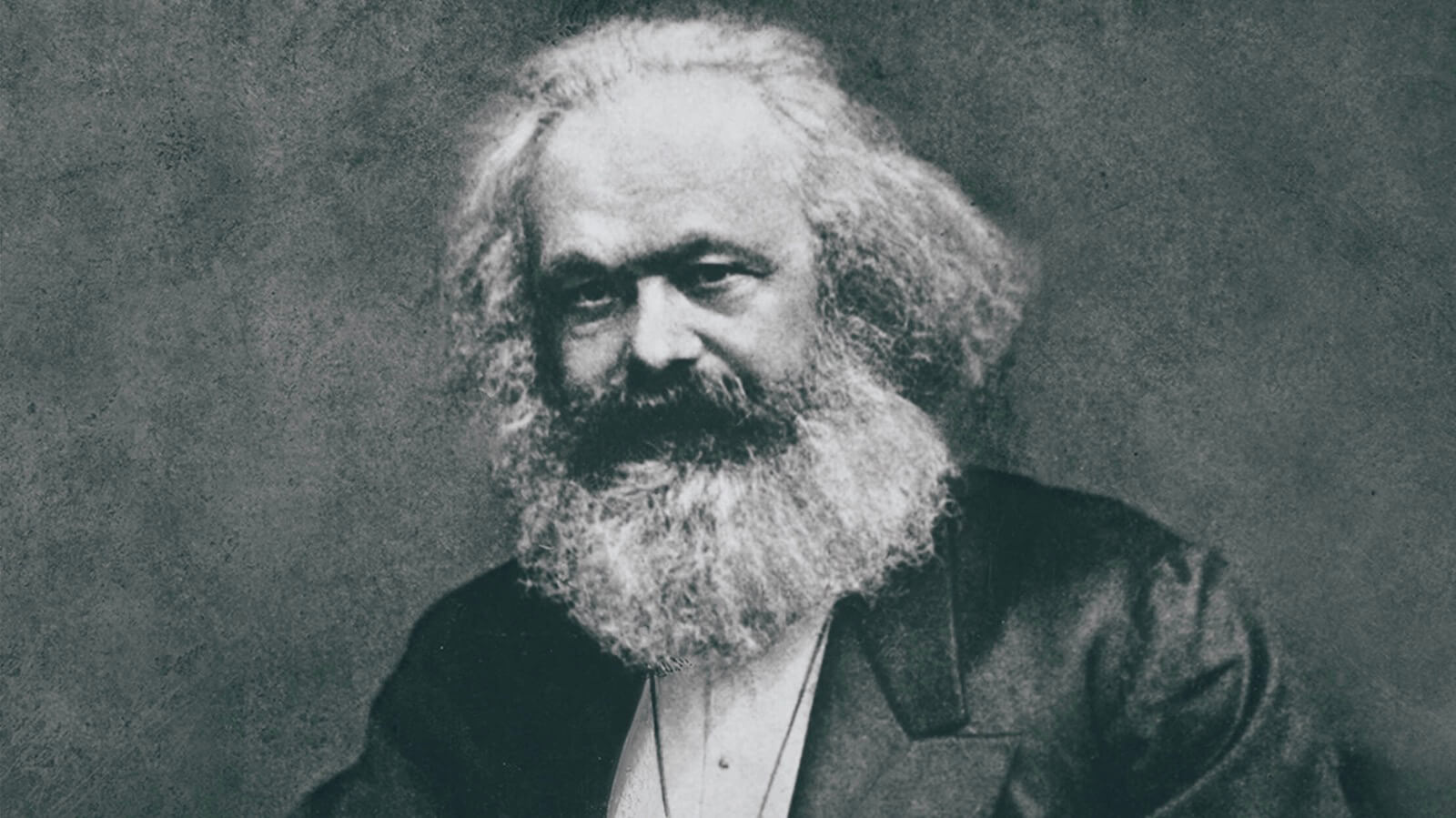
Marx Predicted Our Present Crisis, and Points the Way Out

“We need more robots, better solar panels, instant communication and sophisticated green transport networks. But equally, we need to organise politically to defend the weak, empower the many and prepare the ground for reversing the absurdities of capitalism. In practical terms, this means treating the idea that there is no alternative with the contempt it deserves while rejecting all calls for a “return” to a less modernised existence.”

“Capitalism’s reach is so pervasive it can sometimes seem impossible to imagine a world without it. It is only a small step from feelings of impotence to falling victim to the assertion there is no alternative. But, astonishingly (claims the manifesto), it is precisely when we are about to succumb to this idea that alternatives abound.“

In light of world governments pushing their citizens to “reopen economies”, the oncoming financial crisis sparked by lagging consumption and massive unemployment, and the further consolidation of capital from firms like Amazon, Yanis Varoufakis‘s Guardian article on the Communist Manifesto (adapted from his introduction of a recent edition) for the old man’s bicentennial is as relevant as ever:

If the manifesto holds the same power to excite, enthuse and shame us that it did in 1848, it is because the struggle between social classes is as old as time itself. Marx and Engels summed this up in 13 audacious words: “The history of all hitherto existing society is the history of class struggles.”

From feudal aristocracies to industrialised empires, the engine of history has always been the conflict between constantly revolutionising technologies and prevailing class conventions. With each disruption of society’s technology, the conflict between us changes form. Old classes die out and eventually only two remain standing: the class that owns everything and the class that owns nothing – the bourgeoisie and the proletariat.

This is the predicament in which we find ourselves today. While we owe capitalism for having reduced all class distinctions to the gulf between owners and non-owners, Marx and Engels want us to realise that capitalism is insufficiently evolved to survive the technologies it spawns. It is our duty to tear away at the old notion of privately owned means of production and force a metamorphosis, which must involve the social ownership of machinery, land and resources. Now, when new technologies are unleashed in societies bound by the primitive labour contract, wholesale misery follows. In the manifesto’s unforgettable words: “A society that has conjured up such gigantic means of production and of exchange, is like the sorcerer who is no longer able to control the powers of the nether world whom he has called up by his spells.”

Everyone reading this has lived in the capitalist realist world with no first experience of anything else. Marx was born at precisely the right time in history to see capitalism being born. As such, his analysis is relevant to us, even if he didn’t understand ecology, gender, and technology in quite the same way we do now.

It is the end of ‘the end of history’. There is an alternative to the unequal American reality, regardless of what the political and capitalist classes say. You can see it for yourself in the human-centered responses.

The End of the End of History

The blog Cosmonaut has a lengthy and important article regarding the necessary work to be done in the western imperialist core to stave off 21st-century fascism and neoliberal neglect, especially after the the failed political revolution of the the Sanders left, all in the face of ecological collapse. Read the whole thing.

Regardless of what exigencies arise in the coming years’ political landscape, most of which are entirely obscured to us now, we can be certain of the crux of every political question: ecological collapse. Beyond the most obvious horror of this central question, the high-visibility catastrophes which will increase in magnitude and frequency, the tendrils of crisis will reach outward into every level of our social systems. Drought will spark agricultural collapse, which will cause multiple deluges of human migration, often all at once. Severe storms, flooding, weather-pattern changes, and sea-level rise will render major metropolitan areas functionally uninhabitable. The desertification of regions now devoted to large-scale monoculture or husbandry will disrupt critical commodity chains. This will doubtless cause armed conflict within and between nations.

Climate change is the skeleton key that unlocks the barred gate between us and the better world we struggle for. Every demand we now pursue in the interest of social justice, proletarian self-activation, and relief of sheer human misery will become a critical factor of our social system which has to be radically transformed in order to mitigate climate collapse. This means that any progressive, affirmative program of socio-ecological collapse constitutes, by the very nature of the adaptations required, a minimum program– a suite of demands which, when implemented, create the dictatorship of the proletariat and bring into the world real democracy for the first time. All other potential courses of action responsive to the general crisis coming down the pike are not only reactive and politically reactionary but will be insufficient to the scale of the calamity they respond to. The disastrous, sublime, terrifying situation we are now faced with lays down the gauntlet: we must either overcome our inhumanity and for the first time realize our collective potential, or consign the project of humanity to ignominy and extinction.